
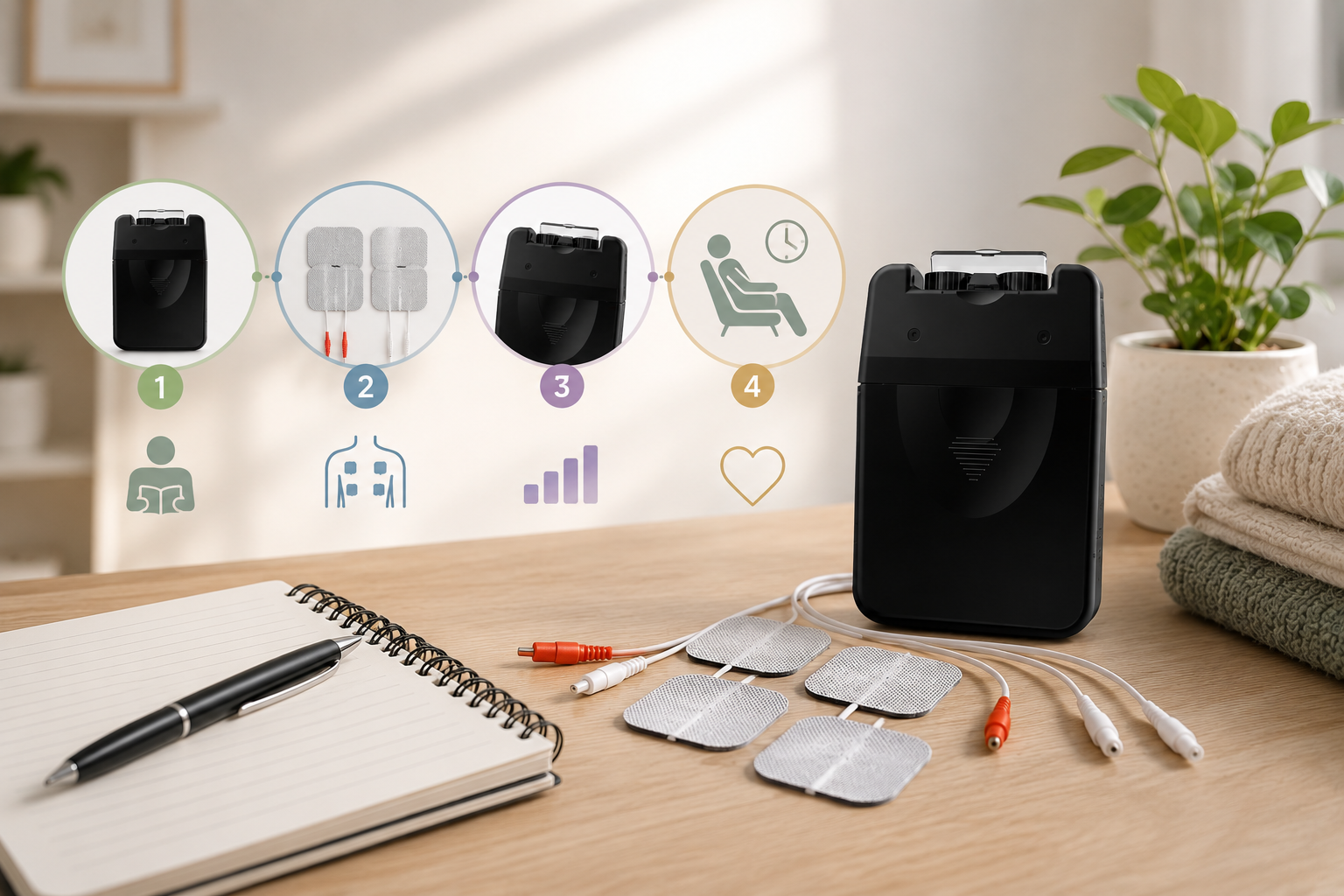
TENS Machine Guide for Beginners
If you have never used a TENS machine before, the controls, electrode pads and different stimulation programmes can initially seem confusing. The good news is that using a TENS machine is generally straightforward once you understand where to place the pads, how to adjust the intensity and when you should avoid using it.
TENS stands for transcutaneous electrical nerve stimulation. A TENS machine sends mild electrical impulses through electrodes placed on the skin. It can provide temporary pain relief for some people, although it does not work for everyone.
This beginner’s guide explains what a TENS machine does, how to use one step by step, where to place the electrodes, how long to use it, common mistakes, important safety precautions and how to choose a suitable machine.
If you are completely new to TENS, start with our guide to what a TENS machine is before moving on to the practical steps below.
Safety disclaimer: This guide is for general educational purposes and is not a substitute for personalised medical advice. Always read your device’s instructions. If you have a medical condition, implanted electrical device, are pregnant or are unsure whether TENS is appropriate for you, speak with an appropriate healthcare professional.
Quick Answer: How Do You Use a TENS Machine?
For most beginners, the basic process is:
- Read the manufacturer’s instructions.
- Check that TENS is suitable for you.
- Clean and dry the skin.
- Place the electrode pads correctly around the painful area.
- Connect the electrodes to the machine.
- Turn the machine on at a low intensity.
- Increase the intensity gradually until the sensation is strong but comfortable.
- Use it for the recommended period.
- Switch the machine off before removing the electrodes.
- Check your skin afterwards.
TENS should generally feel like tingling, buzzing or pulsing rather than pain.
For more detail, see our guide to how a TENS machine works.
What Is a TENS Machine?
TENS stands for transcutaneous electrical nerve stimulation.
A TENS machine is a small device connected to adhesive electrode pads. When switched on, it sends low-voltage electrical impulses through the electrodes and into the skin.
The NHS explains that TENS can provide temporary pain relief. It may work by affecting pain signals travelling to the brain and by encouraging the release of the body’s natural pain-relieving chemicals.
TENS machines are commonly used for pain affecting areas such as:
- Back
- Shoulders
- Knees
- Arms
- Legs
- Joints
- Muscles
However, the appropriate electrode position depends on the area being treated and the instructions supplied with your machine.
TENS Is Not the Same as EMS
You may also see machines described as TENS and EMS machines.
TENS primarily focuses on electrical stimulation for pain management, whereas EMS (electrical muscle stimulation) is designed to stimulate muscle contractions.
Some machines combine both functions.
If you’re comparing these devices, explore TENS and EMS Machines to see the types of features available.
How Does a TENS Machine Work?
TENS electrodes sit on the skin around the area being treated.
The machine then delivers electrical pulses through the electrodes.
You may feel:
- Tingling
- Pulsing
- Buzzing
- A mild tapping sensation
The sensation should normally be noticeable but comfortable.
For a more detailed explanation, read How Does a TENS Machine Work?.
Importantly, stronger does not automatically mean better. Increasing the intensity until the stimulation becomes painful is not a sensible approach.
How to Use a TENS Machine: Step by Step
Step 1: Read the Instructions
Before using the machine, read the manufacturer’s instructions.
This is particularly important because TENS machines can differ in:
- Programmes
- Intensity levels
- Electrode connections
- Timers
- Pulse settings
- Recommended treatment duration
Don’t assume that settings from one machine apply to another.
Step 2: Check Whether TENS Is Suitable for You
TENS isn’t appropriate for everyone.
The NHS advises against using TENS if you have a pacemaker or epilepsy and recommends speaking to your doctor or midwife before using it during pregnancy.
You should also seek professional advice if you have an implanted electrical device or another condition that could affect whether electrical stimulation is appropriate.
Step 3: Prepare Your Skin
Clean and dry the area where you will place the electrodes.
The electrodes need good contact with the skin.
Avoid applying them over:
- Broken skin
- Infected skin
- Irritated skin
- Numb areas
The NHS specifically advises against using TENS on irritated, broken, infected or numb skin.
Step 4: Position the Electrode Pads
Place the pads around the painful area according to the manufacturer’s instructions or advice from a healthcare professional.
For example, pads may be positioned around a painful knee rather than directly over a particular sensitive structure.
Never improvise electrode placement in areas where TENS is not recommended.
The NHS advises against placing electrodes on the neck, eyes, mouth or head.
Step 5: Connect the Machine
Depending on the model, you may connect the electrode leads to the machine before or after applying the pads.
Wireless models can work differently.
Make sure the connections are secure before switching the machine on.
Step 6: Turn the Machine On
Start at a low intensity.
You should gradually increase the stimulation rather than immediately choosing a high setting.
Step 7: Adjust the Intensity
Increase the intensity slowly until you feel a noticeable but comfortable tingling or pulsing sensation.
The treatment should not feel painful.
If it feels sharp, unpleasant or uncomfortable, reduce the intensity.
Step 8: Choose a Programme
Some basic TENS machines offer only a few programmes, while more advanced devices may provide numerous options.
For example, the Healthcare World Wireless TENS Machine in our product range offers 15 automated TENS programmes and 16 intensity levels.
The Healthcare World 3-in-1 Digital TENS and EMS Machine provides multiple therapy modes, dual channels and adjustable intensity.
The Totally TENS TPN-Type Analogue Dual Channel machine provides Burst, Normal and Modulation modes, as well as adjustable intensity and pulse width.
More settings can provide flexibility, but beginners don’t necessarily need to use every available programme immediately.
Start with the settings recommended in your device’s instructions.
Step 9: Set the Timer
If your machine has a timer, use it according to the manufacturer’s recommendations.
For many beginners, a shorter session is a sensible starting point.
Our guide How Long Should You Use a TENS Machine? explains treatment duration in more detail.
Step 10: Switch It Off Before Removing the Pads
When your session is finished, turn the machine off before removing the electrodes.
Remove the pads carefully rather than pulling them aggressively from the skin.
Then check the treated area for any redness or irritation.
Where Should You Put TENS Pads?
Electrode placement is one of the most important parts of using a TENS machine correctly.
The exact position depends on the body area and the instructions for your device.
For Back Pain
Pads are generally placed around the painful area rather than directly over the spine.
Use your manufacturer’s placement instructions or professional guidance.
For Knee Pain
The NHS provides guidance showing electrodes positioned around the painful knee area.
For Shoulder Pain
Pads may be placed around the painful shoulder or surrounding muscles, depending on the machine’s instructions.
For Leg or Muscle Pain
Electrodes can be positioned around the affected muscle area where appropriate.
Areas to Avoid
Do not place TENS electrodes:
- On the front or sides of the neck
- Over the eyes
- Inside or around the mouth
- On the head
- On broken or infected skin
- On numb areas
- On the chest and back simultaneously in a way that sends current across the chest
- Over areas where your healthcare professional has advised against electrical stimulation
The exact restrictions can vary by device, so check the manufacturer’s instructions.
How Strong Should a TENS Machine Feel?
This is one of the most common questions beginners ask.
The answer is: noticeable but comfortable.
You should normally feel the stimulation clearly.
It may feel like:
Tingling → pulsing → buzzing
It should not feel like sharp pain or an unpleasant electrical shock.
If it becomes uncomfortable, reduce the intensity.
Don’t assume that the highest intensity will produce better pain relief.
How Long Should a Beginner Use TENS?
There isn’t one universal treatment duration.
Several NHS services recommend starting with shorter sessions. Cambridge University Hospitals, for example, suggests starting with 30–60 minutes and increasing use if helpful.
Other NHS guidance provides different schedules depending on the device and programme.
A sensible beginner approach is:
Start short → assess how you respond → increase gradually if appropriate.
You can read our detailed guide to Can You Use TENS Every Day? if you want to understand regular use.
Can You Use TENS Every Day?
For some people, yes.
Daily TENS use can be appropriate when the machine is suitable and the treatment is comfortable and useful.
However, daily use doesn’t mean you should automatically use TENS for as many hours as possible.
The NHS notes that TENS can provide temporary pain relief but does not work for everyone.
If you use TENS regularly:
- Follow your machine’s instructions.
- Check your skin.
- Use comfortable intensity.
- Don’t place electrodes repeatedly on irritated skin.
- Don’t sleep with the machine switched on.
- Stop if your pain becomes worse.
Can You Sleep With a TENS Machine?
No, you should not sleep with a TENS machine switched on.
NHS guidance specifically advises against using TENS while sleeping.
You can potentially use TENS before bed while you’re awake if it is suitable for you, but switch the machine off before you fall asleep.
For a complete explanation, read Can You Sleep with a TENS Machine?.
Can You Use TENS While Driving?
No.
The NHS advises against using TENS while driving or operating machinery.
You need to be able to concentrate fully on driving, and TENS can create sensations that distract you.
Use it when you’re safely stationary instead.
Can You Use TENS in the Bath or Shower?
No.
TENS should not be used in water, including the bath or shower.
Remove or switch off the device according to the manufacturer’s instructions before entering water.
Who Should Avoid TENS?
Before using a TENS machine, check whether any contraindications apply to you.
The NHS advises against TENS for people with:
- A pacemaker
- Epilepsy
It also advises pregnant people to speak to their doctor or midwife before using TENS.
Other circumstances may also require caution or professional advice.
For a detailed breakdown, read our guide to TENS contraindications.
TENS Side Effects and Skin Reactions
TENS is generally well tolerated by appropriate users, but some people can experience skin irritation from the electrode pads.
Possible issues include:
- Redness
- Itching
- Irritation
- Discomfort
- Adhesive reactions
If your skin becomes irritated, switch off the machine and remove the electrodes.
For more information, see TENS Side Effects.
More serious problems are uncommon, but incorrect electrode placement, excessive intensity or inappropriate use can cause skin damage or burns.
Common TENS Mistakes Beginners Make
Using Too Much Intensity
You don’t need to turn the machine up as high as possible.
Start low and increase gradually.
Putting Pads Directly on Broken Skin
Electrodes should only be applied to appropriate, intact skin.
Placing Pads Too Close Together
Follow the placement instructions for your device.
Using the Machine While Sleeping
Don’t.
Switch it off before you fall asleep.
Using TENS in Water
Never use it in the bath or shower.
Using It While Driving
Don’t use TENS while driving.
Assuming More Treatment Is Always Better
Longer sessions or higher intensity don’t automatically mean better results.
Ignoring Skin Irritation
If your skin becomes sore, itchy or irritated, stop using the electrodes until the problem has resolved.
TENS vs EMS: What’s the Difference?
Beginners sometimes confuse TENS with EMS.
| Feature | TENS | EMS |
| Main purpose | Pain management | Muscle stimulation |
| Primary target | Nerves/pain pathways | Muscles |
| Sensation | Tingling/pulsing | Muscle contraction |
| Common use | Temporary pain relief | Muscle activation and rehabilitation |
| Available together? | Yes | Yes |
Some machines combine both technologies.
If you’re interested in a multifunction device, browse TENS and EMS Machines.
How to Choose a TENS Machine for Beginners
You don’t necessarily need the machine with the largest number of programmes.
Instead, consider what you’ll actually use.
Adjustable Intensity
This is important because you should be able to gradually find a comfortable stimulation level.
Simple Controls
Beginners may benefit from a straightforward interface.
Timer
A timer can help you manage session duration.
Multiple Programmes
Additional programmes can provide flexibility, although you don’t need to use all of them.
Dual Channels
Dual-channel machines can allow you to treat two areas independently, depending on the model.
Rechargeable Battery
A rechargeable machine can be convenient for regular home use and travel.
Wireless Design
Wireless TENS machines can reduce cable clutter and may be useful when you want more freedom of movement.
Electrode Quality
Good electrode contact is important for consistent stimulation.
TENS Machine Features: What Do Beginners Actually Need?
| Feature | Why it matters |
| Adjustable intensity | Helps you find a comfortable level |
| Timer | Makes session duration easier to manage |
| Multiple modes | Gives you more treatment options |
| Clear display | Makes settings easier to understand |
| Dual channel | Can allow two treatment areas |
| Rechargeable battery | Convenient for regular use |
| Wireless operation | Reduces cable clutter |
| Replacement electrodes | Useful for long-term use |
More features aren’t automatically better.
A simple TENS machine that you understand and use correctly can be more useful than a complicated model with settings you never use.
When Should You Speak to a Healthcare Professional?
You should consider professional advice before using TENS if:
- You aren’t sure what is causing your pain.
- Your pain is getting worse.
- You have a pacemaker or implanted electrical device.
- You have epilepsy.
- You’re pregnant.
- You have reduced sensation.
- You’re unsure where to place the electrodes.
- You develop persistent skin irritation.
- TENS makes your symptoms worse.
TENS should be considered a pain-management tool, not a replacement for appropriate medical assessment.
A Beginner’s TENS Checklist
Before your first session, check:
Before Treatment
- I’ve read the device instructions.
- TENS is appropriate for me.
- My skin is clean and dry.
- The electrode pads are in good condition.
- I know where the pads should go.
- I’m not using TENS while driving or in water.
During Treatment
- I started with a low intensity.
- The sensation is noticeable but comfortable.
- The electrodes are staying in place.
- I’m following the recommended programme.
- I’m monitoring how I feel.
After Treatment
- I switched the machine off before removing the pads.
- I checked my skin.
- I stored the electrodes correctly.
- I noted whether the treatment was useful.
Frequently Asked Questions
Is TENS easy to use?
Yes. Once you understand electrode placement, intensity and basic controls, most TENS machines are relatively straightforward to operate.
How long should a beginner use TENS?
A 30–60-minute session can be a reasonable starting point for many beginners, although you should follow your specific machine’s instructions.
How often can I use TENS?
Some people use TENS regularly or daily. The appropriate frequency depends on your circumstances and the machine you’re using.
Can I sleep with a TENS machine?
No. NHS guidance advises against using TENS while sleeping.
Can I use TENS before bed?
Yes, if it is appropriate for you. You should switch the machine off before falling asleep.
Can I use TENS while driving?
No. TENS should not be used while driving or operating machinery.
Can I use TENS in the shower?
No. TENS should not be used in the bath or shower.
Should TENS hurt?
No. It should normally feel strong but comfortable rather than painful.
Can TENS work immediately?
Some people notice relief during treatment, while others may respond differently. TENS does not work for everyone.
Can I use TENS on any part of my body?
No. Electrode placement matters. Avoid areas such as the head, eyes, mouth and neck, and never place electrodes over broken, infected or numb skin. Follow your device instructions.
What if TENS makes my pain worse?
Stop the treatment. If the problem continues or your symptoms are concerning, speak with an appropriate healthcare professional.
Can I use TENS every day?
Some people can use TENS every day, but daily use should still follow the machine’s instructions and be appropriate for the individual.
Is TENS safe for everyone?
No. Certain conditions and circumstances mean TENS may be unsuitable or require professional advice. See our TENS contraindications guide for more information.
The Bottom Line: TENS Machine Guide for Beginners
A TENS machine can be a useful option for temporary pain relief for some people, but using it correctly is more important than simply turning up the intensity or using it for longer.
As a beginner:
- Read your machine’s instructions.
- Check that TENS is suitable for you.
- Prepare your skin.
- Position the electrodes correctly.
- Start at a low intensity.
- Increase gradually to a strong but comfortable sensation.
- Start with a shorter session.
- Monitor your skin.
- Switch the machine off before removing the electrodes.
- Never use TENS while sleeping, driving or in water.
If you’re ready to compare machines, Explore TENS and EMS Machines.
For more beginner-friendly information, visit the TENS Education Hub.
Related TensLeads Guides
- What Is a TENS Machine?
- How Does a TENS Machine Work?
- How Long Should You Use a TENS Machine?
- Can You Use TENS Every Day?
- Can You Sleep with a TENS Machine?
- TENS Contraindications
- TENS Side Effects
Medical Sources
- NHS — TENS guidance
- Cambridge University Hospitals — TENS for pain relief
- Leeds Teaching Hospitals — TENS for pain control
- Cleveland Clinic — TENS
Safety Disclaimer
This article is for general educational purposes only and is not a substitute for personalised medical advice, diagnosis or treatment. TENS is not appropriate for everyone. Always read and follow the instructions supplied with your device. If you have an implanted electrical device, epilepsy, are pregnant, have reduced sensation or experience unexpected symptoms, consult an appropriate healthcare professional before using TENS.