
TENS Side Effects: What to Expect and How to Use a TENS Machine Safely
If you’re considering a TENS machine for pain relief, it’s sensible to ask about TENS side effects before starting treatment.
TENS, or transcutaneous electrical nerve stimulation, is a non-invasive treatment that delivers a weak electrical current through electrode pads placed on the skin. For most appropriate users, it is generally considered a low-risk treatment. However, side effects can occur, with skin irritation from the adhesive pads and uncomfortable electrical sensations among the more common problems. Rarely, incorrect use can result in burns.
The NHS advises stopping TENS and removing the electrode pads if the skin becomes itchy, irritated or red. It also recommends avoiding TENS on broken, infected or numb skin and not using it on the neck, mouth or eyes.
The short answer: TENS side effects are usually minor when they occur, but safe use still matters. Correct electrode placement, sensible intensity settings and checking your skin can help reduce avoidable problems. TENS is also not suitable for everyone, so people with certain medical conditions or implanted devices should seek appropriate advice before use.
If you’re new to TENS, begin with our guide to what a TENS machine is before using one.
Safety disclaimer: This article is for general educational information only and is not a substitute for medical advice, diagnosis or treatment. Always follow the instructions supplied with your TENS machine and speak to an appropriate healthcare professional if you’re unsure whether TENS is suitable for you.
What Are the Most Common TENS Side Effects?
TENS is generally well tolerated by suitable users, but some people experience unwanted effects.
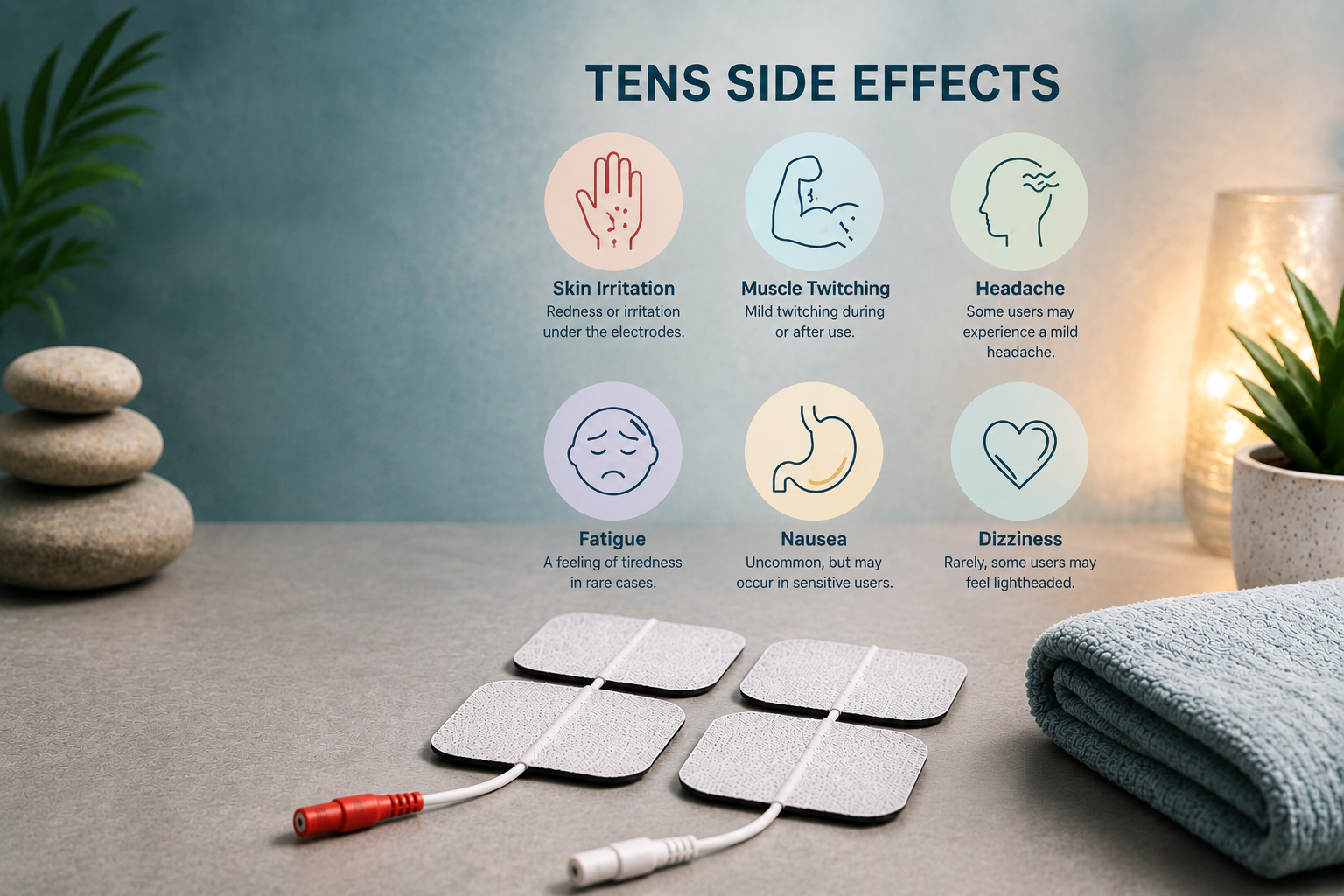
The main TENS side effects to be aware of include:
- Skin redness or irritation
- Itching or an allergic reaction to electrode adhesives
- An uncomfortable tingling or prickling sensation
- Discomfort if the intensity is too high
- Skin burns in rare cases
- Temporary worsening or aggravation of pain in some users
- Less commonly, symptoms such as dizziness, headache or nausea
Cleveland Clinic lists allergic reactions to electrode adhesives, uncomfortable sensations and rare burns from electrodes among possible disadvantages of TENS. It also advises contacting a healthcare provider if symptoms such as rash, itching, dizziness, headache or nausea develop.
NHS guidance is particularly clear about skin reactions: if your skin becomes itchy, irritated or red, switch the machine off and remove the pads.
Not everyone will experience these effects, and many people use TENS without significant problems.
How Does TENS Work?
A TENS machine delivers a low-voltage electrical current through electrodes attached to the skin. You normally feel this as a tingling, buzzing or pulsing sensation.
The NHS explains that TENS can provide temporary pain relief and is thought to work partly by encouraging the body to release natural pain-relieving chemicals and by affecting pain messages travelling from nerves to the brain.
For a more detailed explanation, read our guide to how a TENS machine works.
The important thing to understand is that TENS is intended to help manage pain symptoms. It does not diagnose the cause of pain or guarantee that an underlying condition will improve.
What Should TENS Feel Like?
TENS should generally feel noticeable but comfortable.
The Royal National Orthopaedic Hospital recommends starting at a low setting and gradually increasing the intensity until the sensation feels strong but comfortable. If it becomes painful or uncomfortable, the intensity should be reduced.
You do not need to tolerate painful stimulation to get a potential benefit from TENS.
TENS Side Effects: What Is Normal and What Is Not?
Knowing the difference between a normal sensation and a warning sign can make TENS easier to use safely.
| Experience | What it may mean | What to do |
| Mild tingling | Normal TENS sensation | Continue if comfortable |
| Gentle pulsing | Normal stimulation | Continue if comfortable |
| Strong but comfortable sensation | May be appropriate | Keep at a comfortable level |
| Painful stimulation | Intensity may be too high | Reduce intensity or stop |
| Mild temporary redness | Possible reaction to pads | Monitor the skin |
| Persistent redness or itching | Possible irritation/allergy | Remove pads and stop |
| Blistering or burn-like skin changes | Possible skin injury | Stop and seek appropriate advice |
| Dizziness, nausea or headache | Possible adverse reaction | Stop and contact a healthcare professional if symptoms persist or concern you |
Cleveland Clinic identifies uncomfortable sensations and rare electrode burns as possible TENS risks, while NHS guidance advises removing the pads if skin becomes itchy, irritated or red.
If something feels significantly different from the normal tingling sensation, don’t simply increase or change settings to try to overcome it.
Skin Irritation From TENS Pads
Skin irritation is one of the most common TENS-related problems.
The adhesive pads need to remain in contact with the skin, so repeated use can sometimes cause redness, itching or soreness.
NHS guidance advises stopping TENS and removing the pads if the skin becomes itchy, irritated or red.
Cambridge University Hospitals also recommends checking the skin under the electrodes and moving the pads slightly if soreness develops.
Why Can TENS Pads Irritate the Skin?
There are several possible reasons:
- Sensitivity to the adhesive
- Repeated application to exactly the same area
- Prolonged use
- Poor-quality or worn electrode pads
- Skin that is already irritated
- Electrodes that are not making proper contact
Cleveland Clinic specifically identifies allergic reactions to electrode adhesives as a possible side effect.
What Should You Do If TENS Pads Irritate Your Skin?
If your skin becomes itchy, sore or significantly red:
- Turn the TENS machine off.
- Remove the electrode pads carefully.
- Check the affected skin.
- Give the area time to recover.
- Do not immediately place the pads back over the irritated area.
- Seek medical advice if the reaction is persistent, severe or concerning.
If you repeatedly react to the adhesive, speak to a healthcare professional or check whether suitable alternative electrodes are available for your machine.
Can TENS Cause Burns?
Burns are possible but uncommon.
Cleveland Clinic lists burns from electrodes as a rare risk.
The Royal National Orthopaedic Hospital also warns that TENS can cause burns and severe skin damage if the electrical current is too high, electrodes are incorrectly positioned or too close together, or the device is used for prolonged periods without appropriate breaks.
This is why you should never treat TENS intensity as a competition.
How to Reduce the Risk of Burns
- Start with a low intensity.
- Increase gradually.
- Keep the sensation comfortable.
- Follow the manufacturer’s electrode-placement instructions.
- Make sure electrode pads are making proper contact with the skin.
- Don’t place pads too close together.
- Don’t use damaged or unsuitable electrodes.
- Check your skin regularly.
- Follow the recommended treatment time.
If you notice blistering, significant skin damage or a burn-like reaction, stop using the machine and seek appropriate medical advice.
Can TENS Make Pain Worse?
It is possible for some people to find TENS uncomfortable or to feel that their pain has been aggravated.
Worcestershire Acute Hospitals NHS Trust notes that, very occasionally, patients may report that TENS has aggravated their pain.
If TENS makes your pain noticeably worse, don’t assume that you simply need a higher intensity.
Instead:
- Turn the machine off.
- Remove the electrodes.
- Check the skin.
- Consider whether the electrode placement is correct.
- Speak to an appropriate healthcare professional if the pain continues or concerns you.
TENS should be used as a symptom-management option, not as a way to push through unexplained or worsening pain.
Can TENS Cause Dizziness, Headaches or Nausea?
Cleveland Clinic lists dizziness, headaches and nausea among symptoms that should be reported to a healthcare provider if they develop while using TENS.
These symptoms are not the typical sensation expected from a normal TENS session.
If you experience them:
- Stop the machine.
- Remove the electrodes.
- Sit or rest somewhere safe.
- Don’t drive or operate machinery.
- Seek appropriate medical advice if the symptoms persist, are severe or concern you.
Don’t continue treatment simply because you assume the symptoms are unrelated.
Who Should Avoid TENS Side Effects?
The question “who should avoid TENS side effects?” is better understood as asking who may need to avoid TENS or seek professional advice before using it.
The NHS states that TENS should not be used if you:
- Have epilepsy
- Have a pacemaker
- Are pregnant, unless your doctor or midwife tells you to use it
It also advises against using TENS on irritated, broken, infected or numb skin.
Other clinical guidance identifies additional circumstances requiring caution, including certain heart conditions and implanted devices.
People With Pacemakers or Implanted Devices
Electrical stimulation can be inappropriate for people with certain implanted devices.
The NHS advises people with pacemakers not to use TENS.
Leeds Teaching Hospitals NHS Trust also advises against TENS in people with implanted defibrillators and certain implanted metallic or electronic devices.
If you have an implanted device, speak to the healthcare professional responsible for your care before using TENS.
People With Epilepsy
The NHS specifically advises people with epilepsy not to use TENS.
Don’t assume that choosing a lower intensity makes it suitable.
Pregnancy
The NHS advises against using TENS during pregnancy unless your doctor or midwife tells you to.
TENS can be used in some maternity settings for labour pain, but this does not mean that unsupervised home use is appropriate throughout pregnancy.
People With Reduced Sensation
TENS should not be applied to numb areas.
If you can’t properly feel the treatment area, you may not be able to recognise whether the stimulation is becoming too strong or whether your skin is reacting.
NHS guidance specifically says not to use TENS on numb skin.
People With Certain Heart Conditions
Cleveland Clinic lists heart disease among conditions where TENS should not be used without appropriate medical advice.
If you have a heart condition, speak to your healthcare professional before using electrical stimulation.
Where Should TENS Pads Not Be Placed?
Correct electrode placement is essential.
The NHS advises against placing TENS pads on:
- The neck
- The mouth
- The eyes
- Irritated skin
- Broken skin
- Infected skin
- Numb areas
It also advises against using TENS on the chest and back at the same time.
Cambridge University Hospitals additionally advises against placing pads near or over the heart.
Neck
Do not place electrodes on the front or sides of the neck.
Cambridge University Hospitals explains that placing pads on the front of the neck may cause faintness.
Eyes and Mouth
Never place TENS electrodes near the eyes or inside the mouth.
Cambridge University Hospitals warns that inappropriate placement near the eyes or in the mouth may cause burns.
Around the Heart
Do not place electrodes so that the current passes through or around the heart.
The NHS advises against placing electrodes across the chest and back simultaneously.
Broken or Infected Skin
Never use TENS electrodes over open wounds, broken skin or infected areas.
These areas can become more irritated by the electrode pads or electrical stimulation.
How Should Beginners Use TENS Safely?
If you’ve established that TENS is suitable for you, following a simple routine can help reduce avoidable side effects.
1. Read the Instructions
Different TENS machines have different programmes, electrode connections, intensity controls and recommended uses.
Always follow the instructions supplied with your particular machine.
2. Check Your Skin
Before attaching the electrodes, check that the skin is intact and suitable.
Do not place pads on broken, infected, irritated or numb areas.
3. Place the Electrodes Correctly
Use the manufacturer’s guidance.
Don’t copy an electrode diagram from another machine without checking whether it applies to your device and treatment.
4. Start at a Low Intensity
Switch the device on at a low setting.
Gradually increase the intensity until the sensation is strong but comfortable.
5. Monitor Your Skin
During and after treatment, check for:
- Redness
- Itching
- Soreness
- Rash
- Blistering
- Other unusual skin changes
If the skin becomes itchy, irritated or red, switch the machine off and remove the pads.
6. Stop If the Sensation Becomes Painful
TENS should not be painful.
If it becomes uncomfortable, reduce the intensity. If the problem continues, stop the session.
7. Keep the Device Dry
Never use a TENS machine in the bath or shower.
8. Don’t Use TENS While Driving
The NHS advises against using TENS while driving or using tools or machinery.
9. Don’t Sleep With TENS Switched On
The NHS advises against using TENS while sleeping.
TENS Safety Checklist
Before using a TENS machine, run through this quick checklist:
- I have checked that TENS is appropriate for me.
- I have read the manufacturer’s instructions.
- My treatment area has intact skin.
- The area isn’t numb.
- The electrodes are positioned correctly.
- The pads aren’t on my neck, eyes or mouth.
- The electrodes aren’t positioned around my heart.
- I’ve started at a low intensity.
- The stimulation feels strong but comfortable.
- I’m monitoring my skin.
- I’m not using TENS in water.
- I’m not sleeping while wearing it.
- I’m not driving or operating machinery while using it.
The NHS and NHS hospital guidance support these core precautions.
Common Mistakes That Can Increase TENS Side Effects
Using the Highest Intensity
More electrical stimulation does not automatically mean better pain relief.
Start low and increase gradually.
Reusing Irritated Skin
If your skin reacts to the pads, don’t simply put them back in exactly the same place.
Give the skin time to recover and consider seeking advice if irritation continues.
Using Worn or Poorly Adhering Pads
Electrodes need appropriate contact with the skin.
If pads have dried out or are no longer working correctly, follow the manufacturer’s guidance on replacement.
Placing Pads Too Close Together
Incorrect spacing can make stimulation uncomfortable and may increase the risk of skin problems.
The Royal National Orthopaedic Hospital warns that incorrect electrode placement or positioning pads too close together can contribute to burns.
Ignoring Persistent Symptoms
TENS should not be used to mask a worsening or unexplained problem indefinitely.
If your pain changes significantly or you develop new symptoms, seek appropriate medical advice.
Assuming Every Machine Is Used the Same Way
Different TENS devices can have different controls and programmes.
Follow the instructions for your specific machine rather than assuming that a setting from another device is equivalent.
Does TENS Side Effects Work?
The phrase “does TENS side effects work?” isn’t technically correct because side effects aren’t a treatment.
If the question is whether TENS itself works for pain relief, the answer is sometimes.
The NHS says TENS can provide temporary pain relief for certain types of short-term and long-term pain but does not work for everyone.
Cleveland Clinic similarly notes that TENS works well for many people, but the amount and duration of pain relief varies between individuals.
The purpose of learning about side effects is therefore not to make TENS more effective. It’s to help you recognise what is normal, identify warning signs and use the treatment more responsibly.
How Can You Reduce the Risk of TENS Side Effects?
There is no way to guarantee that you will never experience a side effect, but sensible use can reduce avoidable problems.
Use the Right Intensity
Start low and gradually increase the intensity.
Use Correct Electrode Placement
Follow your machine’s instructions and avoid restricted areas.
Look After Your Skin
Check your skin before and after sessions, particularly if you use TENS regularly.
Replace Electrodes When Necessary
Old or worn pads may not provide the intended contact.
Follow the manufacturer’s instructions for storage, cleaning and replacement.
Don’t Overuse One Area
The Royal National Orthopaedic Hospital advises avoiding application to exactly the same spot every day and recommends checking the skin for inflammation.
Stop When Something Doesn’t Feel Right
You don’t need to push through pain, significant irritation or other unexpected symptoms.
Choosing a TENS Machine With Side Effects in Mind
Once you’ve established that TENS is suitable for you, the machine you choose should be easy to control and compatible with your intended use.
Consider:
Adjustable Intensity
Adjustable intensity allows you to start at a lower setting and gradually find a comfortable level.
Clear Controls
Straightforward controls make it easier to change settings without accidentally selecting an inappropriate intensity.
Timer
A timer can help you keep track of sessions.
Electrode Quality
Check the number, size and type of electrodes supplied and whether replacement pads are available.
Single or Dual Channel
Dual-channel models can provide independent control of two electrode sets.
TENS and EMS Functions
Some machines combine TENS with EMS and massage functions.
For example, the Healthcare World 3-in-1 Digital TENS and EMS Machine is a dual-channel model combining TENS, EMS and massage functions. Its supplied product information describes multiple therapy modes, adjustable intensity and four self-adhesive electrodes.
The Healthcare World Wireless TENS Machine offers 15 automated TENS programmes and 16 intensity levels, together with wireless remote control and rechargeable operation.
The Totally TENS TPN-Type Analogue Dual Channel TENS Machine offers independent channels, Burst, Normal and Modulation modes, adjustable intensity, pulse-width adjustment and timed sessions.
These features can provide flexibility, but more programmes or higher intensity levels do not mean fewer side effects. Safe use depends on suitability, correct placement and appropriate settings.
You can compare available TENS and EMS machines and consider which features are genuinely useful for you.
When Should You Speak to a Healthcare Professional?
Contact an appropriate healthcare professional if:
- Your skin develops a significant or persistent reaction.
- You develop blistering or a burn-like injury.
- TENS causes significant or worsening pain.
- You experience dizziness, nausea or headaches during treatment.
- You don’t know what is causing your pain.
- Your pain is getting worse.
- You have an implanted medical device.
- You have epilepsy.
- You are pregnant.
- You have a heart condition.
- You have significant numbness or reduced sensation.
- You’re unsure whether TENS is suitable for you.
Cleveland Clinic advises contacting a healthcare provider if symptoms such as rash, itching, dizziness, headache or nausea develop.
The NHS also recommends speaking to a healthcare professional if you’re unsure whether TENS is safe or where to place the electrode pads.
FAQs
What are the most common TENS side effects?
The most common issues include skin irritation, redness or itching from electrode pads and an uncomfortable tingling sensation. Allergic reactions to adhesives can also occur.
Can TENS burn your skin?
Rarely, yes. Burns can occur if TENS is used incorrectly, including with excessively high intensity or unsuitable electrode placement.
Why is my skin red after using TENS?
Mild redness can occur following electrode use. However, if the skin becomes itchy, irritated or significantly red, the NHS advises switching off the machine and removing the pads.
Can TENS cause an allergic reaction?
Yes. Some people can react to the adhesive used on electrode pads.
If you develop persistent itching, rash or other signs of an allergic reaction, stop using the pads and seek appropriate advice.
What should TENS feel like?
TENS should generally feel like tingling, buzzing or pulsing. The sensation should be strong but comfortable rather than painful.
Can TENS make pain worse?
Occasionally, some users report aggravated pain. If TENS noticeably increases your pain, stop the session rather than simply increasing the intensity.
Can I use TENS on sensitive skin?
Sensitive skin may be more prone to irritation from electrode adhesives. If you have particularly sensitive skin, discuss suitable electrode options with a healthcare professional and monitor the treatment area carefully.
Can I use TENS every day?
How frequently you should use TENS depends on your individual circumstances and the instructions for your machine. Cleveland Clinic notes that some people use TENS several times a day, but recommends checking with a healthcare provider.
Can I sleep with a TENS machine?
No. The NHS advises against using TENS while sleeping.
Can I use TENS in the shower?
No. TENS should not be used in the bath or shower.
Can I drive while using TENS?
No. The NHS advises against using TENS while driving or using tools or machinery.
Who should avoid TENS?
The NHS advises against TENS for people with epilepsy or a pacemaker and recommends medical advice during pregnancy. Other conditions and implanted devices may also require caution or professional assessment.
The Bottom Line on TENS Side Effects
TENS side effects are generally uncommon and often minor when they occur, but they should not be ignored.
Skin irritation, itching and uncomfortable stimulation are among the main problems to watch for. Rarely, incorrect use can result in burns or more significant skin damage.
The best way to use TENS responsibly is to:
- Check that TENS is appropriate for you.
- Follow the manufacturer’s instructions.
- Start with a low intensity.
- Use the correct electrode placement.
- Avoid damaged, infected or numb skin.
- Monitor your skin regularly.
- Stop if the treatment becomes painful.
- Never use TENS in water, while sleeping or while driving.
- Seek professional advice when you have relevant medical conditions or are unsure about suitability.
TENS can provide temporary pain relief for some people, but it does not work for everyone and shouldn’t be presented as a guaranteed solution.
If you’re ready to compare different devices, Explore TENS and EMS Machines and look for features that match how you actually intend to use your machine.
For more practical information, visit the TENS Education Hub.
Safety Disclaimer
This article is for general educational purposes only and is not a substitute for personalised medical advice, diagnosis or treatment. TENS is not appropriate for everyone. Always read the instructions supplied with your device. If you have an implanted device, epilepsy, a heart condition, are pregnant, have reduced sensation or experience unexpected symptoms, consult an appropriate healthcare professional before continuing TENS.
Supporting Medical Sources
- NHS — TENS (transcutaneous electrical nerve stimulation) NHS TENS guidance
- Cleveland Clinic — Transcutaneous Electrical Nerve Stimulation (TENS) Cleveland Clinic TENS guidance
- Cambridge University Hospitals — TENS advice Cambridge University Hospitals TENS guidance
- Royal National Orthopaedic Hospital — Patient Guide to TENS RNOH TENS guide
- Leeds Teaching Hospitals — TENS for pain control Leeds Teaching Hospitals TENS guidance
Internal Links Included
- what a TENS machine is → What Is a TENS Machine?
- how a TENS machine works → How Does a TENS Machine Work?
- TENS and EMS machines → TENS and EMS Machines
- TENS Education Hub → TENS Education Hub