
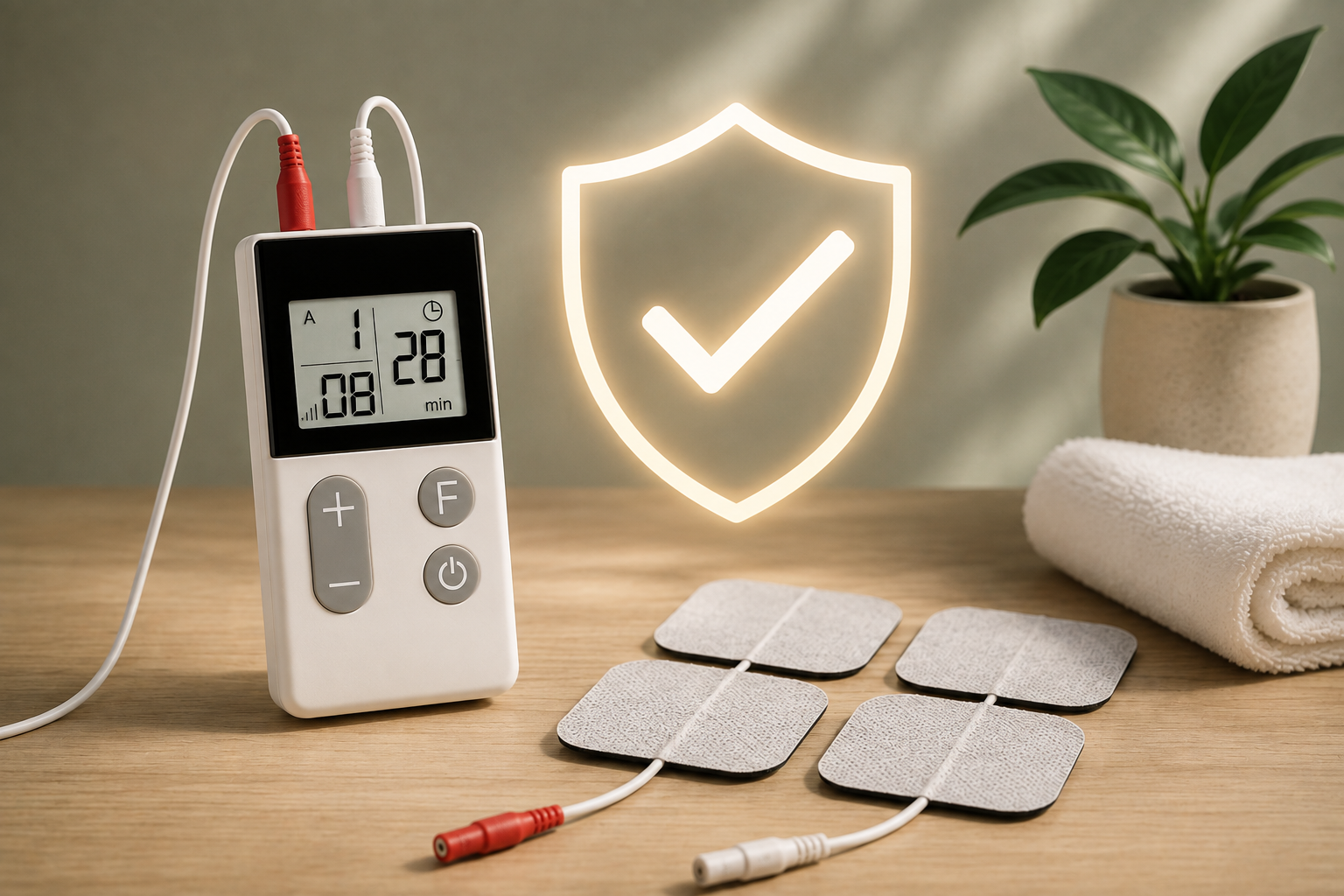
Is TENS Safe? A UK Guide to Safe TENS Machine Use
If you are considering a TENS machine for pain relief, one of the first questions to ask is simple: is TENS safe?
For many people, TENS is considered a safe, non-invasive option when it is used correctly. However, TENS is not suitable for everyone. There are important restrictions around pregnancy, epilepsy, pacemakers and other implanted devices, as well as where electrodes should be positioned.
The NHS says TENS can provide temporary pain relief but does not work for everyone. It also advises people to check with a healthcare professional if they are unsure whether TENS is appropriate for them.
So, the short answer is: TENS can be safe for many people when used according to the manufacturer’s instructions, but it is not universally safe or suitable.
If you are new to TENS, it may also help to first understand what a TENS machine is and what it is designed to do.
Safety disclaimer: This article is for general information only and is not medical advice. Always follow your TENS machine’s instructions and speak to a qualified healthcare professional if you are unsure whether TENS is suitable for you.
What You Need to Know About TENS Safety
TENS stands for transcutaneous electrical nerve stimulation. A TENS machine sends a weak electrical current through electrode pads placed on the skin.
The treatment is designed to produce a tingling sensation rather than pain. The NHS describes TENS as a treatment that may provide temporary pain relief for certain types of short- and long-term pain.
For most appropriate users, the main safety considerations are relatively straightforward:
- Use the machine according to its instructions.
- Start with a comfortable intensity.
- Place electrodes only where recommended.
- Do not use electrodes on damaged, infected or numb skin.
- Keep the device away from water.
- Do not sleep while wearing a switched-on TENS machine.
- Do not drive or operate machinery while using it.
- Check with a healthcare professional if you have a relevant medical condition or implanted device.
NHS guidance specifically warns against using TENS with a pacemaker or epilepsy and advises pregnant users to seek medical advice before use.
How Does TENS Work?
Understanding how TENS works can make the safety instructions easier to understand.
A TENS unit delivers small electrical impulses through adhesive electrodes. These impulses create a tingling sensation and can influence the way pain signals are processed.
The NHS says TENS is thought to work partly by encouraging the body to release natural pain-relieving chemicals and by interfering with pain messages travelling to the brain.
If you want a more detailed explanation, read our guide to how TENS works.
The important point is that TENS is intended to help manage pain, not diagnose or cure the condition causing it.
Should TENS Feel Painful?
No.
A TENS session should generally produce a noticeable tingling or pulsing sensation that remains comfortable.
Cleveland Clinic advises adjusting the settings until the electrical impulses feel strong but comfortable.
If the stimulation feels painful, reduce the intensity. If discomfort continues, stop the treatment and check the device instructions.
Increasing the intensity as high as possible is not a sensible measure of whether a TENS machine is working.
Is TENS Safe for Everyone?
No.
This is one of the most important things to understand before buying or using a TENS machine.
The NHS specifically states that you should not use TENS if you have epilepsy or a pacemaker, and that you should not use it during pregnancy unless your doctor or midwife tells you to.
Other NHS hospital guidance gives additional cautions, including certain heart conditions and implanted electrical or metallic devices.
Cleveland Clinic also lists conditions and circumstances in which TENS may not be appropriate, including pregnancy, implanted devices, epilepsy, deep vein thrombosis, bleeding disorders and some heart conditions.
Because recommendations can depend on your individual circumstances, do not rely on a generic online list to decide whether TENS is safe for you.
If you have a medical condition, take regular medication, are pregnant or have an implanted device, speak to an appropriate healthcare professional before using TENS.
Who Should Avoid TENS?
People With a Pacemaker or Certain Implanted Devices
Electrical stimulation may interfere with some implanted medical devices.
The NHS advises people with pacemakers not to use TENS.
Some NHS hospital guidance also advises caution with other implanted electrical or metallic devices.
If you have a pacemaker, implantable defibrillator or another implanted device, ask your healthcare professional before considering TENS.
People With Epilepsy
The NHS advises people with epilepsy not to use TENS.
If you have a history of seizures, speak to your healthcare professional rather than assuming that a low-intensity setting makes TENS safe.
During Pregnancy
Pregnancy requires particular caution.
The NHS advises that TENS should not be used during pregnancy unless a doctor or midwife tells you to.
This does not mean TENS is never used during pregnancy. TENS is sometimes used for labour pain under appropriate guidance. However, pregnancy-related use should follow advice from your maternity team rather than general home-use instructions.
People With Reduced Sensation
You should be particularly cautious about placing TENS electrodes on areas where you cannot properly feel sensation.
The NHS advises against using TENS on numb areas of skin.
If you cannot reliably feel the stimulation, it may be difficult to judge whether the intensity is appropriate.
People With Damaged or Infected Skin
Do not place electrodes over:
- Broken skin
- Irritated skin
- Infected skin
- Fragile skin
- Areas with significant inflammation
- Numb areas
The NHS specifically advises against using TENS on irritated, broken, infected or numb skin.
Some people may also experience skin irritation or an allergic reaction to electrode adhesives.
Where Should You Not Put TENS Pads?
Correct electrode placement is an important part of safe TENS use.
The NHS advises against placing TENS electrodes on the:
- Neck
- Mouth
- Eyes
- Damaged or infected skin
- Numb skin
It also advises against placing electrodes across the chest and back at the same time.
Cambridge University Hospitals similarly advises against placing TENS electrodes on the front of the neck, near the eyes or in the mouth, and says pads should not be placed around the heart.
Why Does Electrode Placement Matter?
The electrodes determine where the electrical stimulation is delivered.
Using the pads in an unsuitable location can increase the risk of discomfort or other problems. That’s why you should follow the placement instructions supplied with your particular machine.
If you are unsure where to position the pads, ask a GP, physiotherapist or another appropriate healthcare professional.
Do not assume that a placement shown online for one TENS machine will automatically be appropriate for every person or every condition.
How Should Beginners Use TENS Safely?
If you have established that TENS is appropriate for you, the safest approach is to start simply.
Step 1: Read the Instructions
Before switching on the device, read the manufacturer’s instructions.
Different machines have different controls, modes, electrode connections and recommended settings.
Step 2: Check Your Skin
Make sure the intended electrode area is clean and suitable.
Do not place pads over broken, infected, irritated or numb skin.
Step 3: Position the Electrodes Correctly
Use the manufacturer’s recommended placement.
If you’re treating a condition that has already been assessed by a healthcare professional, follow any placement guidance they have provided.
Step 4: Start at a Low Intensity
Turn the device on at a low setting and gradually increase the intensity.
The goal is a strong but comfortable sensation, not pain.
Step 5: Monitor How Your Skin Reacts
After using TENS, check the skin underneath the electrode pads.
Some people experience redness or irritation from the pads or adhesive. The NHS advises switching off the machine and removing the pads if the skin becomes itchy, irritated or red.
Step 6: Follow the Recommended Session
Don’t assume that longer or stronger treatment is automatically better.
Follow the instructions supplied with your machine and any advice given by your healthcare professional.
What Are the Common Risks of TENS?
For suitable users, TENS is generally considered a low-risk treatment, but side effects and problems can occur.
Skin Irritation
This is one of the more common problems.
Electrode adhesives can cause redness, itching or irritation. Some people may be sensitive or allergic to the adhesive.
If irritation occurs, remove the electrodes and allow the skin to recover. NHS guidance recommends stopping if the skin becomes itchy, irritated or red.
Uncomfortable Stimulation
The electrical sensation can feel strange when you’re new to TENS.
It should not normally be painful. If the sensation becomes uncomfortable, lower the intensity or stop the session.
Skin Burns
Burns are uncommon, but Cleveland Clinic identifies burns from electrodes as a possible risk.
Using the correct pads, following the manufacturer’s instructions and avoiding inappropriate settings can help reduce avoidable problems.
Incorrect Electrode Placement
Putting pads in the wrong location can create unnecessary risk.
Never improvise electrode placement around sensitive areas such as the front of the neck, head, eyes or mouth.
Water Exposure
TENS machines should not be used in water.
The NHS advises against using TENS in the bath or shower.
Always keep the device dry and follow the manufacturer’s instructions for handling and cleaning it.
What Should You Never Do While Using TENS?
A simple safety checklist can help.
TENS Safety Checklist
- Read the manufacturer’s instructions before use.
- Check whether TENS is appropriate for you.
- Start with a low intensity.
- Use electrodes only on appropriate areas.
- Check the skin before and after treatment.
- Stop if the stimulation becomes painful.
- Keep the device away from water.
- Do not sleep while wearing a switched-on TENS machine.
- Do not drive while using TENS.
- Do not operate machinery while using TENS.
- Keep the machine away from children.
- Do not share adhesive electrodes between users.
- Ask a healthcare professional if you are uncertain about suitability.
The NHS specifically advises against sleeping with TENS, using it in the bath or shower, and using it while driving or operating tools or machinery.
Does Is TENS Safe Work?
If by “does TENS work?” you mean whether TENS can actually provide pain relief, the answer is yes for some people, but not everyone.
The NHS says TENS can provide temporary pain relief for certain types of short- and long-term pain, but it also explicitly states that it does not work for everyone.
Cleveland Clinic similarly notes that the amount and duration of pain relief varies between individuals. Some people may feel better during treatment, while others may experience relief for a period afterwards.
This is why TENS should not be marketed as a guaranteed solution.
The aim is generally to manage symptoms and make movement or everyday activities more comfortable, where it is appropriate.
Is TENS Safe for Back Pain?
TENS is used by some people for back pain, and NHS hospital guidance lists back pain among the problems for which TENS may provide relief.
However, safe use depends on the individual and the cause of the pain.
If your back pain is new, unexplained, severe or getting worse, don’t simply assume that a TENS machine is the right response.
Some NHS guidance recommends seeking medical advice rather than using TENS for a new pain that has not been assessed.
Is TENS Safe for Neck Pain?
Extra care is needed with the neck.
The NHS advises users not to place TENS electrodes on the neck.
Cambridge University Hospitals specifically warns against placing electrodes on the front of the neck because this may cause faintness and advises against placing them near the eyes or in the mouth.
If you’re considering TENS for neck discomfort, don’t improvise pad placement. Follow the instructions for your particular device and seek professional guidance if you’re uncertain.
How to Choose a TENS Machine Safely
Once you’ve established that TENS is appropriate for you, the next step is choosing a machine that is easy to operate and suitable for your intended use.
Look at more than just the number of programmes.
Adjustable Intensity
A machine with adjustable intensity allows you to gradually find a comfortable stimulation level.
Clear Controls
Simple controls and a readable display can make it easier to adjust settings safely.
Timer
A timer can help you manage sessions without having to remember when you started.
Electrode Quality
Look at the number and size of the supplied pads and whether replacement electrodes are readily available.
Single or Dual Channel
A dual-channel machine can allow separate control of two electrode sets, which may be useful when treating different areas.
TENS and EMS Functions
Some devices combine TENS with EMS and other functions.
For example, the Healthcare World 3-in-1 Digital TENS and EMS Machine is a dual-channel model combining TENS, EMS and massage functions. Its supplied product information describes adjustable intensity, multiple therapy modes and four self-adhesive electrodes.
Another option is the Healthcare World Wireless TENS Machine, which offers 15 automated TENS programmes, 16 intensity levels, wireless remote control and rechargeable operation.
The Totally TENS TPN-Type Analogue Dual Channel machine offers independent channels, Burst, Normal and Modulation modes, adjustable intensity, pulse-width adjustment and 30- or 60-minute timing options.
These features can make a machine more flexible, but more features do not automatically mean a machine is safer or more effective for you.
For more options, explore TENS and EMS machines and compare the features that match your needs.
When Should You Ask a Healthcare Professional?
You don’t need to consult a professional every time you consider a home pain-relief product, but there are situations where professional advice is particularly important.
Speak to an appropriate healthcare professional before using TENS if:
- You have a pacemaker.
- You have another implanted electrical or metallic device.
- You have epilepsy.
- You have a heart condition.
- You are pregnant or may be pregnant.
- You have reduced sensation.
- You have unexplained pain.
- You have damaged or infected skin in the intended treatment area.
- You’re uncertain about electrode placement.
- You have been advised to avoid electrical stimulation.
The NHS recommends checking with a GP or another healthcare professional if you’re unsure whether TENS is safe for you.
Professional advice is also appropriate if pain persists or worsens rather than improving.
FAQs
Is TENS safe?
For many suitable users, TENS can be a safe, non-invasive treatment when used correctly. However, it is not suitable for everyone. The NHS specifically advises against TENS for people with epilepsy or a pacemaker and recommends medical advice during pregnancy.
Is TENS safe to use every day?
How often TENS can be used depends on the individual, the reason for using it and the machine’s instructions. Cleveland Clinic notes that some people use TENS several times a day but recommends checking with a healthcare provider.
Follow your device instructions rather than assuming that daily use is appropriate for you.
Can TENS damage your nerves?
TENS is designed to deliver low electrical currents through the skin, but incorrect use can cause problems such as skin irritation or, rarely, burns.
Use the machine according to its instructions and stop if you experience unexpected pain or skin problems.
Can I use TENS if I have a pacemaker?
The NHS advises people with pacemakers not to use TENS.
If you have an implanted medical device, speak to your healthcare professional before considering electrical stimulation.
Can I use TENS while pregnant?
The NHS advises against using TENS during pregnancy unless your doctor or midwife tells you to.
TENS may be used in some maternity settings, particularly for labour pain, but pregnancy-related use should follow guidance from your maternity team.
Can I sleep with a TENS machine?
No. The NHS advises against using TENS while sleeping.
Can I use TENS in the bath or shower?
No. TENS should not be used in water. The NHS advises against using it in the bath or shower.
Can I drive while using TENS?
The NHS advises against using TENS while driving or operating tools or machinery.
What should TENS feel like?
It should generally feel like a noticeable tingling or electrical sensation rather than pain. Start at a low intensity and gradually increase it to a strong but comfortable level.
Can TENS cause skin irritation?
Yes. Some people experience redness, itching or irritation from electrode pads. If this happens, remove the pads and stop the treatment until the skin settles.
The Bottom Line: Is TENS Safe?
So, is TENS safe?
For many people, TENS can be a useful and relatively low-risk option for temporary pain relief when used correctly. But safe does not mean suitable for everyone.
The biggest safety considerations are knowing whether TENS is appropriate for you, using the correct electrode placement, choosing a comfortable intensity and following the manufacturer’s instructions.
People with pacemakers, epilepsy, certain heart conditions, implanted devices and those who are pregnant should seek appropriate medical advice before using TENS.
You should also avoid using TENS on damaged, infected or numb skin, around the eyes or mouth, on the neck, in water, while sleeping or while driving.
If you are new to TENS, don’t focus only on finding the most powerful machine. Look for a device with clear controls, suitable intensity adjustment, appropriate electrodes and features you’ll actually use.
You can explore TENS and EMS machines to compare different options.
For more information about TENS technology, safety and practical use, visit the TENS Education Hub.
Safety Disclaimer
This article is intended for general educational purposes and is not a substitute for personalised medical advice, diagnosis or treatment. Always follow the instructions supplied with your TENS machine. If you have a medical condition, an implanted device, are pregnant, have epilepsy or have concerns about your symptoms, consult an appropriate healthcare professional before using TENS.
Supporting Medical Sources
- NHS — TENS (transcutaneous electrical nerve stimulation)
- Cleveland Clinic — Transcutaneous Electrical Nerve Stimulation (TENS)
- Cambridge University Hospitals — TENS for pain relief
- Leeds Teaching Hospitals — TENS for pain control