
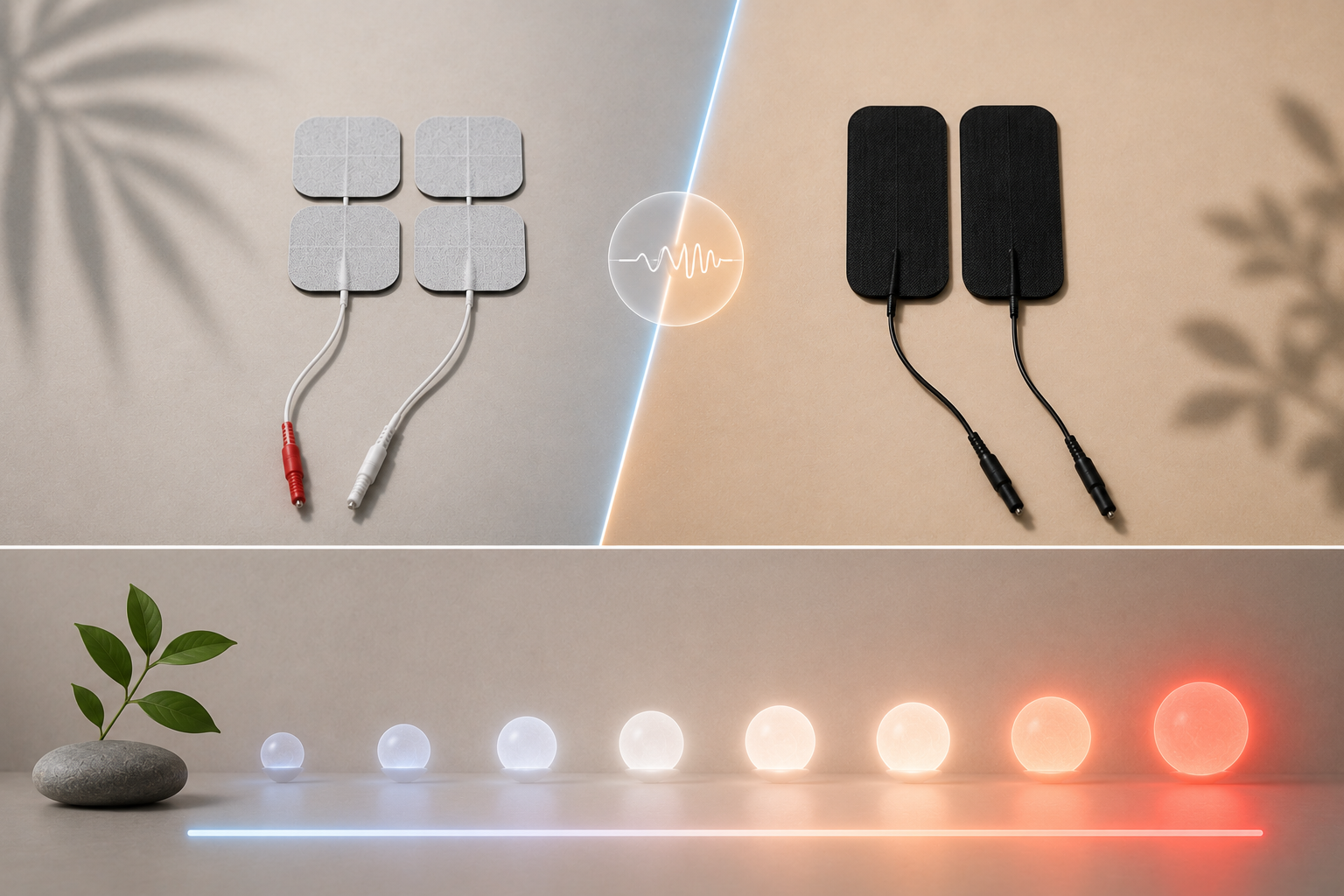
TENS vs EMS: What’s the Difference and Which One Should You Choose?
If you’re researching electrical stimulation therapy, you’ve probably come across the terms TENS and EMS. While they may look similar and some devices even combine both functions, they are designed for different purposes. Understanding TENS vs EMS is essential before choosing a device, particularly if you’re looking for pain management, muscle recovery, or rehabilitation.
The main difference is straightforward: TENS (Transcutaneous Electrical Nerve Stimulation) is primarily used to help manage pain by stimulating sensory nerves, whereas EMS (Electrical Muscle Stimulation) targets muscles to encourage contractions for strengthening, recovery, or rehabilitation. Although they both use gentle electrical impulses delivered through electrodes placed on the skin, the way they work and the results they aim to achieve are quite different.
In this guide, we’ll explain how each technology works, when it may be appropriate to use one over the other, who should avoid these devices, and how beginners can use them safely. Whether you’re comparing TENS vs EMS UK products for home use or simply looking for a reliable TENS vs EMS guide, this article will help you make an informed decision based on current medical guidance rather than marketing claims.
What Is TENS?
TENS, or Transcutaneous Electrical Nerve Stimulation, is a non-invasive therapy that uses low-voltage electrical impulses to stimulate sensory nerves through adhesive electrode pads placed on the skin. Rather than treating the underlying cause of pain, TENS is intended to help reduce the perception of pain while the device is in use.
Researchers believe TENS works in two main ways. First, electrical stimulation may interfere with pain signals travelling from the affected area to the brain, making discomfort less noticeable. Secondly, stimulation may encourage the body to release endorphins, which are natural chemicals involved in pain regulation. While these mechanisms are well recognised, research shows that results can vary between individuals and conditions.
Many people use TENS to help manage back pain, neck pain, arthritis, joint discomfort, sports-related aches, or persistent musculoskeletal pain. Healthcare professionals may also recommend it as part of a wider pain management programme alongside exercise, physiotherapy, or medication where appropriate.
If you’re new to this therapy, our guide on What Is a TENS Machine? provides a more detailed introduction to how TENS devices work and what they’re commonly used for.
What Is EMS?
EMS stands for Electrical Muscle Stimulation. Unlike TENS, which targets sensory nerves, EMS delivers electrical impulses that stimulate motor nerves, causing muscles to contract and relax.
These repeated contractions are similar to those that occur during physical activity, although they are generated electrically rather than voluntarily. EMS is commonly used during physiotherapy, sports rehabilitation, muscle conditioning, and post-injury recovery programmes under appropriate guidance.
For athletes, EMS may be incorporated into recovery routines after training sessions to encourage muscle activation. In rehabilitation settings, healthcare professionals sometimes recommend EMS to help reduce muscle weakness or maintain muscle function when regular exercise is temporarily difficult.
Although EMS causes muscles to contract, it should not be viewed as a replacement for regular exercise or strength training. While it can support rehabilitation and recovery in suitable circumstances, lasting improvements in muscle strength generally require an overall programme that includes physical activity and professional advice where needed.
How Do TENS and EMS Actually Work?
Although both technologies deliver electrical impulses through adhesive electrodes, they target different parts of the body.
How TENS Works
TENS focuses on sensory nerves located beneath the skin. These electrical impulses are designed to modify how pain signals are processed by the nervous system rather than making muscles contract significantly.
Most users experience a tingling or buzzing sensation during treatment. The intensity can usually be adjusted until it feels strong but comfortable without becoming painful. Pain relief, when achieved, often lasts only while the unit is operating or for a short period afterwards, depending on the individual and the condition being treated.
Our article on How Does a TENS Machine Work? explains these mechanisms in greater detail, including how pulse frequency and intensity influence the treatment experience.
How EMS Works
EMS targets motor nerves responsible for controlling muscle movement. Instead of creating a gentle tingling sensation alone, EMS produces visible muscle contractions by repeatedly stimulating the muscle fibres.
Depending on the programme selected, contractions may feel similar to controlled muscle exercises. Different EMS settings can vary in intensity, contraction time, and recovery periods, allowing therapists or users to tailor sessions according to their rehabilitation or training goals.
Because EMS actively contracts muscles, it generally feels stronger than a standard TENS session, even when used comfortably.
TENS vs EMS: Understanding the Key Differences
Although both therapies rely on electrical stimulation, their intended outcomes are not the same.
TENS is designed primarily for pain management. It aims to reduce the sensation of pain by stimulating nerves without producing significant muscle contractions. People experiencing ongoing musculoskeletal discomfort often use TENS alongside other treatments recommended by healthcare professionals.
EMS, on the other hand, is intended for muscle stimulation. Rather than focusing on pain signals, it encourages muscles to contract repeatedly, making it useful for rehabilitation, muscle conditioning, and certain recovery programmes.
This difference also affects how each device feels. During a TENS session, users generally notice a comfortable tingling sensation across the skin. During EMS therapy, noticeable muscle contractions occur as the muscles tighten and relax throughout the session.
It’s worth noting that some modern devices combine both technologies into one unit. These combination devices allow users to switch between TENS for pain management and EMS for muscle stimulation depending on their individual needs. However, even when using a dual-function device, each mode should be used according to its intended purpose rather than interchangeably.
Which One Should You Choose?
Choosing between TENS vs EMS depends entirely on what you’re hoping to achieve.
If your main goal is managing everyday aches, persistent joint discomfort, or musculoskeletal pain, TENS is generally the more appropriate option. It is commonly used by people looking for a drug-free method that may help reduce pain as part of a broader treatment plan.
If your focus is muscle rehabilitation, recovery after physical activity, or supporting muscle activation following injury under professional guidance, EMS may be the better choice.
Some people benefit from having access to both technologies. For example, someone recovering from an injury may use TENS to help manage discomfort while later incorporating EMS during rehabilitation to encourage muscle activation as recommended by a physiotherapist.
Ultimately, neither technology should be viewed as universally “better.” Instead, understanding the purpose of each helps you select the option that best aligns with your individual circumstances and healthcare advice.
Practical Uses of TENS and EMS
While understanding the technical differences between TENS and EMS is helpful, knowing when each therapy is typically used is even more important. Both technologies have established roles, but they serve different purposes and should be chosen according to individual needs rather than convenience.
TENS is most commonly used by people experiencing acute or chronic musculoskeletal pain. This may include lower back pain, neck pain, shoulder discomfort, knee pain, osteoarthritis, or pain associated with certain injuries. Some people also use TENS during physiotherapy or alongside prescribed treatment plans to help manage symptoms. It is important to remember that while TENS may reduce the sensation of pain for some individuals, it does not treat the underlying cause of the condition.
EMS is generally chosen when the goal is muscle activation rather than pain management. Physiotherapists may recommend EMS during rehabilitation following surgery or injury, particularly when normal movement is limited. It is also used by athletes as part of muscle recovery programmes and, in some cases, to help maintain muscle activity during periods of reduced mobility. Although EMS can support rehabilitation, it should not be considered a substitute for regular exercise or a complete physiotherapy programme.
Many modern devices include both TENS and EMS modes, allowing users to switch between therapies depending on their requirements. This can be particularly useful for people who need pain management at one stage of recovery and muscle stimulation at another.
If you’re exploring devices suitable for home use, our range of TENS and EMS Machines includes options designed for different treatment goals. Choosing a quality device and compatible accessories can help ensure consistent performance and safe use.
Does TENS vs EMS Work?
One of the most common questions people ask is whether these therapies actually work.
The answer is that both TENS and EMS have evidence supporting specific uses, but neither provides guaranteed results for everyone.
Research suggests that TENS may help reduce pain for some people, particularly when used as part of a broader pain management strategy. However, the level of benefit varies depending on the individual, the condition being treated, electrode placement, and the treatment settings. Organisations such as the NHS and Cleveland Clinic acknowledge that while some people experience noticeable pain relief, others may find little or no improvement.
EMS has stronger evidence for muscle activation and rehabilitation in appropriate clinical settings. It can help stimulate muscles that are difficult to activate voluntarily, making it a valuable tool during certain stages of recovery. However, claims that EMS alone can dramatically build muscle or replace exercise are not supported by current evidence.
Rather than viewing either therapy as a cure, it is more accurate to think of them as supportive tools that may complement other treatments when used correctly and under appropriate guidance.
Safety Considerations Before Using TENS or EMS
Although TENS and EMS are generally considered safe for many adults, they are not suitable for everyone. Using electrical stimulation correctly is essential to reduce the risk of discomfort or complications.
Electrode pads should always be placed according to the manufacturer’s instructions. They should never be positioned over the front of the neck, across the chest in a way that allows current to pass through the heart, over broken or infected skin, or directly on the eyes or face unless specifically instructed by a healthcare professional.
The intensity should always begin at a low level before being increased gradually until the stimulation feels strong but comfortable. Stronger stimulation does not necessarily produce better results and may simply lead to unnecessary discomfort.
It is also important to inspect electrode pads and lead wires regularly. Worn pads may not stick properly and can reduce treatment effectiveness, while damaged leads may affect the delivery of electrical impulses. Replacing accessories when needed helps maintain both safety and performance.
Who Should Avoid TENS vs EMS?
Although many people can use these devices safely, certain individuals should avoid them or seek medical advice before starting treatment.
People with implanted electronic medical devices, such as pacemakers or implantable cardioverter-defibrillators (ICDs), should not use TENS or EMS unless specifically advised by their healthcare provider. The electrical impulses may interfere with the function of these devices.
Pregnant women should always consult a healthcare professional before using electrical stimulation therapy. While TENS is sometimes used during labour under professional guidance, it may not be appropriate during other stages of pregnancy without medical advice.
People with epilepsy, certain heart conditions, impaired skin sensation, active infections, or unexplained pain should also speak with a healthcare professional before using either therapy. Anyone recovering from recent surgery or managing a serious medical condition should seek personalised guidance to ensure electrical stimulation is suitable for their circumstances.
If you experience worsening pain, unusual symptoms, skin irritation that does not improve, or discomfort during treatment, stop using the device and consult a healthcare professional.
How Should Beginners Use TENS vs EMS?
If you’re new to electrical stimulation therapy, taking a cautious approach can help you become familiar with the device while minimising the risk of discomfort.
Start by reading the user manual thoroughly before your first session. Every device has slightly different programmes, intensity ranges, and operating instructions, so becoming familiar with your specific model is important.
Begin with the lowest comfortable intensity and increase it gradually until you feel effective stimulation without pain. Sessions should generally follow the manufacturer’s recommended duration rather than being extended unnecessarily.
Pay close attention to electrode placement, as correct positioning has a significant impact on treatment effectiveness. Placing pads incorrectly may reduce the benefits or create an uncomfortable sensation.
Finally, give yourself time to understand how your body responds. Some people notice benefits quickly, while others may require several sessions before deciding whether the therapy is helpful. If you are unsure about the most appropriate settings or placement for your condition, seek advice from a qualified healthcare professional or physiotherapist.
Common Mistakes to Avoid
Many first-time users assume that increasing the intensity to the highest setting will produce better results. In reality, stronger stimulation is not always more effective and may simply become uncomfortable.
Another common mistake is confusing TENS and EMS modes on combination devices. Since each therapy serves a different purpose, selecting the correct mode is essential for achieving your intended goal.
Users also sometimes continue using worn electrode pads for too long. Pads that no longer adhere properly may reduce the effectiveness of treatment and create uneven stimulation. Replacing them when necessary helps maintain consistent performance.
Finally, it is important not to rely solely on TENS or EMS while ignoring professional medical advice. Persistent or worsening pain should always be assessed by a qualified healthcare provider rather than managed independently with electrical stimulation alone.
Choosing the Right Device
If you’re deciding between a TENS-only device, an EMS-only device, or a combination model, think about your primary objective.
If pain management is your main concern, a dedicated TENS unit may be sufficient. If you’re undergoing muscle rehabilitation or looking for muscle stimulation under professional guidance, EMS may better suit your needs. For people who may benefit from both forms of therapy at different times, a dual-function device offers greater flexibility without requiring separate machines.
At TensLeads, you can Explore TENS and EMS Machines designed for reliable home use, along with compatible electrode pads, lead wires, and accessories to help keep your device performing effectively.
Conclusion
When comparing TENS vs EMS, the most important thing to remember is that these technologies are designed for different purposes. Although both use electrical impulses delivered through adhesive electrode pads, they target different parts of the body and support different treatment goals.
TENS is primarily intended to help manage pain by stimulating sensory nerves and reducing the perception of pain. It is commonly used as part of a wider pain management plan and may be suitable for people experiencing musculoskeletal discomfort. EMS, by contrast, stimulates motor nerves to produce muscle contractions, making it more appropriate for muscle rehabilitation, conditioning, and recovery when used correctly.
Neither therapy should be viewed as a guaranteed solution or a replacement for professional medical care. The effectiveness of TENS or EMS depends on factors such as the individual’s condition, correct electrode placement, appropriate settings, and consistent use according to the manufacturer’s instructions. For persistent, worsening, or unexplained symptoms, seeking advice from a healthcare professional remains essential.
If you’re still deciding which option is right for you, consider your primary goal. If pain management is your priority, TENS may be the better choice. If you’re focusing on muscle activation or rehabilitation, EMS may be more appropriate. For those who may benefit from both therapies, combination devices offer the flexibility to switch between treatment modes as required.
To find a device that suits your needs, explore TENS and EMS Machines from TensLeads. You’ll also find a wide range of compatible replacement electrode pads, lead wires, and accessories to help keep your device working effectively.
Frequently Asked Questions
Does TENS vs EMS work?
Both TENS and EMS are supported by clinical evidence for specific purposes, but neither works in exactly the same way for every person. TENS may help some people manage pain by altering the way pain signals are processed, while EMS is commonly used to stimulate muscles during rehabilitation or recovery. Results vary depending on the condition being treated, the device settings, and individual response. These therapies should be viewed as supportive treatments rather than guaranteed solutions.
Who should avoid TENS vs EMS?
People with pacemakers, implantable cardioverter-defibrillators (ICDs), or other implanted electronic medical devices should not use TENS or EMS unless advised by a healthcare professional. Individuals who are pregnant, have epilepsy, certain heart conditions, reduced skin sensation, or unexplained pain should also seek medical advice before using either therapy. If you are unsure whether electrical stimulation is appropriate for you, consult a qualified healthcare professional.
How should beginners use TENS vs EMS?
Beginners should start by reading the manufacturer’s instructions carefully and choosing the correct mode for their intended purpose. Begin with the lowest comfortable intensity and increase it gradually if needed. Electrode pads should always be placed according to the user manual, and sessions should follow the recommended duration. If you are uncertain about the most suitable settings or pad placement, a physiotherapist or healthcare professional can provide guidance.
Medical Disclaimer
This article is intended for general educational purposes only and should not be considered medical advice. TENS and EMS devices may not be suitable for everyone, and individual results can vary. Always follow the manufacturer’s instructions and consult a qualified healthcare professional before starting electrical stimulation therapy if you have an underlying medical condition, are pregnant, have an implanted medical device, or are unsure whether treatment is appropriate. Do not use TENS or EMS as a substitute for professional diagnosis, treatment, or emergency medical care.