
TENS for Lower Back Pain: Does It Help and How to Use It Safely?
Lower back pain is extremely common and can make everyday activities such as sitting, standing, walking, working or sleeping more difficult. If you are looking for non-drug options for lower back pain pain relief, you may have come across transcutaneous electrical nerve stimulation (TENS).
A TENS machine uses mild electrical impulses delivered through adhesive electrode pads placed on the skin. The sensation is usually described as tingling or buzzing, and some people find that it provides temporary pain relief while the device is switched on. However, TENS does not work for everyone, and clinical guidance does not support using it routinely for low back pain.
The National Institute for Health and Care Excellence (NICE) specifically recommends that TENS should not be offered for managing low back pain, with or without sciatica. This means TENS should not be presented as a proven treatment for the underlying cause of lower back pain.
If you are considering lower back pain TENS therapy, the safest approach is to understand its limitations, use the machine correctly, position electrode pads carefully and stop if it causes pain or skin irritation.
What Is TENS for Lower Back Pain?
TENS stands for transcutaneous electrical nerve stimulation. A TENS machine is a small, portable device connected to adhesive electrode pads. When switched on, the machine sends mild electrical impulses through the skin.
TENS is thought to influence how pain signals are processed by the nervous system. NHS guidance describes TENS as a treatment that can provide temporary pain relief, although it does not work for everyone.
For someone experiencing lower back discomfort, the aim of using a tens machine for lower back pain would generally be temporary symptom relief rather than treating the reason the pain developed.
TENS may produce a comfortable tingling sensation without requiring medication, which is one reason some people choose to try it. However, individual responses vary considerably.
Does TENS Help Lower Back Pain?
The short answer is: TENS may provide temporary pain relief for some people, but it is not considered a recommended treatment for low back pain by NICE.
NICE guidance on low back pain and sciatica recommends against offering TENS for managing low back pain. Its evidence review found insufficient evidence of meaningful clinical benefit to support TENS for this purpose. NICE also noted that TENS is generally intended to provide temporary relief while the stimulation is being delivered rather than a long-term improvement.
This is important when deciding whether to try a TENS machine. A device should not be viewed as a cure for back pain or as a replacement for appropriate assessment and treatment.
The NHS also advises that TENS does not work for everyone and recommends speaking with a healthcare professional if you are unsure what is causing your pain.
For that reason, think of TENS as an optional pain-management tool rather than a treatment that fixes the underlying problem.
How Does TENS Work?
TENS delivers electrical stimulation through pads placed on the skin. The stimulation activates nerves involved in sensation, producing a tingling feeling.
The exact mechanisms by which TENS influences pain are still discussed in clinical literature. NHS and hospital guidance describe mechanisms involving the modulation of pain signals and stimulation of the body’s natural pain-relieving chemicals, including endorphins.
You should not expect the electrical sensation itself to eliminate the cause of your back pain. Instead, if TENS is helpful for you, the practical benefit may be that the pain feels more manageable while you are using the device.
This distinction matters because lower back pain can have many different causes. Persistent, severe, worsening or unexplained pain may need professional assessment rather than simply being managed with a TENS machine.
Where Should TENS Pads Go for Lower Back Pain?
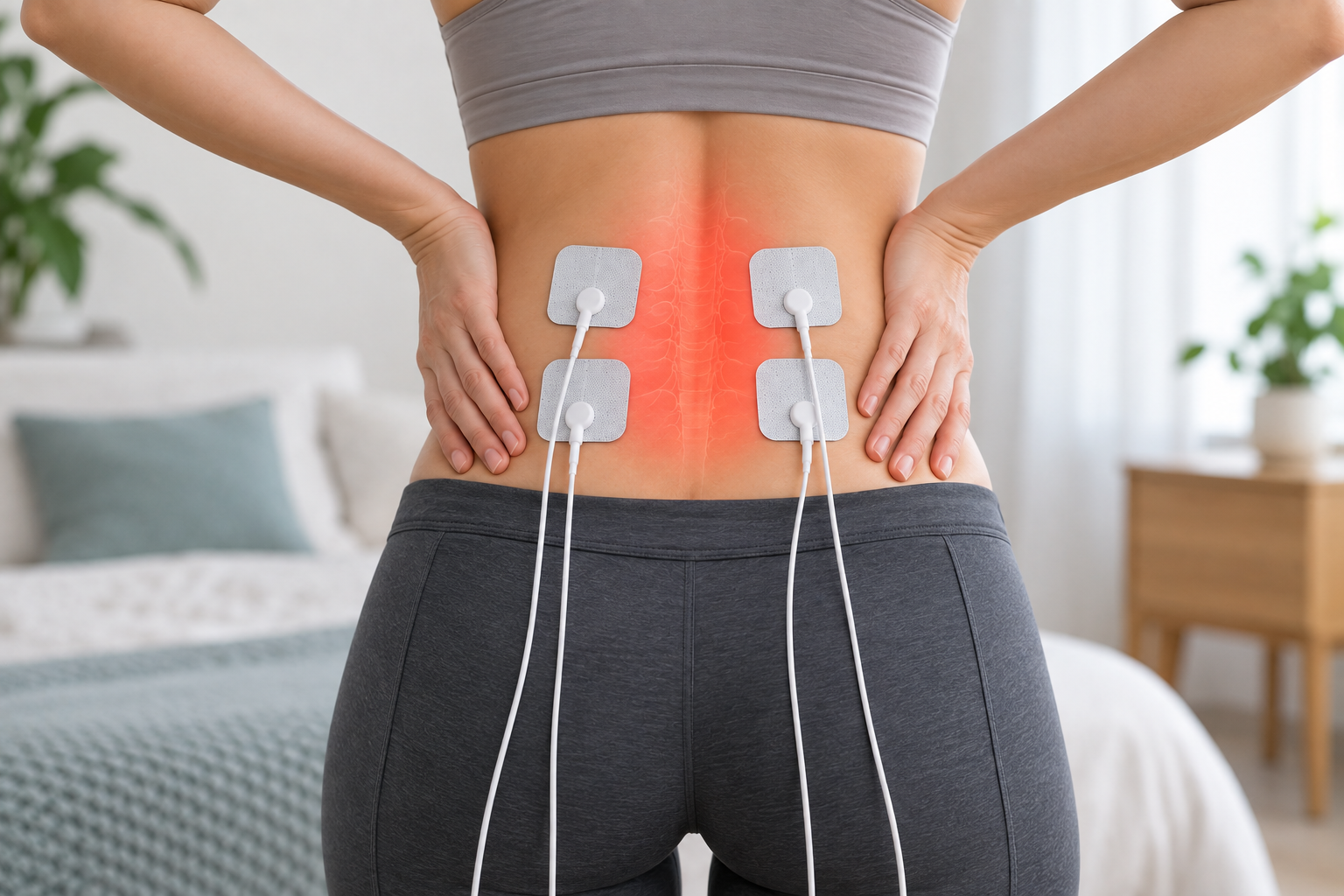
If you have been advised that TENS is appropriate for you, electrode pads are generally positioned on or around the painful area rather than directly over areas where electrodes should not be placed.
For lower back pain, this commonly means positioning pads on either side of the painful area, with an appropriate gap between them. RNOH guidance advises placing pads either side of the painful area and keeping them at least 2.5 cm (1 inch) apart.
Cambridge University Hospitals also advises that a physiotherapist can demonstrate where electrodes should be positioned. Depending on the individual situation, pads may be placed on or around the painful area or along nerves supplying that area.
General lower-back pad placement principles:
- Switch the TENS machine off before applying or removing pads.
- Apply pads to clean, dry and intact skin.
- Position pads around the painful area rather than on irritated or broken skin.
- Keep the electrodes separated according to the instructions supplied with your machine.
- Do not position pads over areas of numbness or reduced sensation.
- Never place pads over the front or sides of the neck, eyes or mouth.
- Do not use TENS on the chest and upper back at the same time.
- Follow the electrode-placement instructions supplied with your specific device.
Do not assume that one placement pattern will work for everyone. If you are unsure where your pads should go, ask a physiotherapist, GP or other appropriate healthcare professional for guidance.
For more practical information about getting the most from your device, see the TensLeads guide on why a TENS machine may feel weak.
How to Use a TENS Machine for Lower Back Pain
Using a TENS machine correctly is important for both comfort and safety. Always read the manufacturer’s instructions first because controls, programmes, connectors and recommended usage can vary between devices.
1. Prepare your skin
Clean and dry the area before applying the electrode pads. Avoid lotions, oils or other substances that could affect adhesion and electrical contact.
Do not apply electrodes to broken, infected, irritated or numb skin. NHS guidance specifically advises against using TENS on these areas.
2. Position the electrode pads
With the machine switched off, place the pads around the painful area using the positioning guidance provided with your machine or by your healthcare professional.
Make sure the pads are firmly attached and are not touching each other.
3. Switch on and start at a low intensity
Once the pads are in place, switch the machine on and gradually increase the intensity.
You should normally feel a noticeable tingling sensation. It should be strong enough to feel but should not be painful or unpleasant. RNOH advises starting at a low setting and gradually increasing the strength until it feels strong but comfortable.
Turning the intensity up as far as possible is not the goal. More stimulation does not automatically mean better pain relief.
4. Adjust the programme to a comfortable setting
Some modern devices provide different programmes, frequencies and pulse widths. There is no single setting that is appropriate for everyone with lower back pain.
If your machine has several modes, follow the manufacturer’s instructions and choose a setting that feels comfortable. If a healthcare professional has recommended a particular programme, follow their advice.
5. Monitor how your skin feels
Check the skin underneath and around the electrode pads. Stop using the machine if you experience significant irritation, pain or other unexpected problems.
The NHS recommends switching off TENS and removing the pads if the skin becomes itchy, irritated or red.
How Long Can TENS Be Used for Lower Back Pain?
There is no single duration that applies to everyone, particularly because TENS is not routinely recommended by NICE for low back pain.
Some NHS patient guidance suggests beginning with shorter sessions, such as 30–60 minutes, and increasing use if the treatment is helpful and appropriate. Cambridge University Hospitals gives this type of general advice, while other NHS guidance provides different maximum-use recommendations.
Because recommendations can differ between devices and individuals, follow your manufacturer’s instructions and any advice provided by your healthcare professional.
Most importantly, do not sleep while wearing a TENS machine. Do not use it in the bath or shower, while driving or while operating machinery.
TENS for Lower Back Pain: Common Mistakes to Avoid
Using TENS incorrectly can make the experience less comfortable and may reduce the usefulness of the device.
Using too much intensity
A common misconception is that a stronger electrical sensation must produce better results. In reality, the target is a strong but comfortable tingling sensation. If stimulation becomes painful, reduce the intensity.
Putting pads directly on damaged skin
Electrodes should not be placed over broken, infected, irritated or numb skin. This is particularly important when the lower back is already sore or irritated.
Allowing pads to become worn
Reusable electrode pads gradually lose their ability to adhere properly. Poor contact can make stimulation feel inconsistent or weak.
If you notice that your TENS machine no longer feels as effective, check the condition of the pads, the battery, the leads and the electrode connections before automatically increasing the intensity.
Expecting TENS to cure back pain
TENS is not a cure. RNOH describes it as a method that may provide short-term relief while the machine is operating.
If your back pain continues, keeps returning or interferes significantly with daily life, focus on appropriate assessment and management rather than relying exclusively on electrical stimulation.
Using the same pad position indefinitely
Moving electrodes slightly within an appropriate area can help reduce repeated irritation to exactly the same patch of skin. Always stay within safe placement guidance rather than moving pads to unsuitable areas.
TENS Safety Checklist for Lower Back Pain
Before using a TENS machine, check the following:
| Check | What to do |
| Skin | Use only on clean, dry and intact skin |
| Pads | Make sure they adhere properly and remain separated |
| Intensity | Start low and increase gradually |
| Sensation | Aim for strong but comfortable tingling |
| Placement | Keep pads around the painful area and follow device guidance |
| Duration | Follow your machine’s instructions or professional advice |
| Water | Never use TENS in a bath or shower |
| Driving | Do not use TENS while driving |
| Sleep | Do not sleep while wearing the device |
| Medical conditions | Check suitability with a healthcare professional if unsure |
NHS guidance also advises against TENS for people with epilepsy or a pacemaker and says pregnancy should be discussed with a doctor or midwife before use.
When Should You Speak to a Healthcare Professional?
Lower back pain can have many possible causes, so it is important not to assume that TENS is suitable simply because the pain is located in your lower back.
Speak to a GP, physiotherapist or other healthcare professional if you are unsure what is causing the pain, if symptoms persist or worsen, or if you need advice about whether TENS is appropriate for you.
Professional guidance can also help with electrode placement, especially if you have difficulty positioning the pads or have reduced sensation around the area.
TENS should be considered alongside appropriate management rather than as a substitute for assessment when assessment is needed.
Choosing a TENS Machine for Lower Back Pain
If you decide to purchase a device, focus on practical features rather than choosing a machine simply because it is advertised specifically for back pain.
Useful features may include:
- Adjustable intensity levels so you can increase stimulation gradually.
- Clear controls that are easy to operate.
- Multiple programmes or adjustable settings.
- Reliable electrode connections.
- Portable design if you want to use the device at home or while carrying out everyday activities.
- Replacement electrode pads that are easy to obtain.
- A suitable timer or automatic shut-off feature.
- Appropriate UKCA or CE marking when applicable.
The cost of replacement electrode pads is also worth considering. Pads are consumable accessories and their performance can decline with repeated use, so easy access to compatible replacements can make a difference over time.
You can also read the TensLeads guide to TENS machine features and what to look for before buying before choosing a device.
Can Electrode Pads Make a Difference?
The electrode pads are the part of the TENS system that sits directly against your skin, so good contact is important.
Pads should adhere securely without causing excessive skin irritation. If a pad is no longer sticky enough to maintain proper contact, replacing it may provide a more consistent connection.
When buying replacement electrode pads, check the connector type and dimensions carefully. Not every pad is compatible with every TENS machine.
For lower back pain, avoid choosing pads purely because they are marketed for a particular condition. Compatibility, size, skin comfort and correct placement are more useful considerations.
Key Takeaways
- TENS provides temporary pain relief for some people, but it does not work for everyone.
- NICE recommends that TENS should not be offered for managing low back pain.
- TENS should not be described as a cure for lower back pain.
- If you use TENS, place electrode pads only on appropriate, intact skin and follow the manufacturer’s instructions.
- Start with a low intensity and gradually increase it to a strong but comfortable level.
- Do not use TENS while sleeping, driving, bathing or showering.
- Replace worn electrode pads when they no longer provide reliable contact.
- Speak to a healthcare professional if you are unsure whether TENS is suitable for you or if you are concerned about your back pain.
Frequently Asked Questions
Does TENS help lower back pain?
TENS may provide temporary pain relief for some people, but it does not work for everyone. NICE recommends not offering TENS for managing low back pain, so it should not be considered a proven treatment for the underlying cause of back pain.
Where should TENS pads go for lower back pain?
When TENS is considered appropriate, pads are generally positioned on or around the painful area, often on either side of it. Keep the electrodes separated and never place them on broken, infected, irritated or numb skin. A healthcare professional can demonstrate suitable placement if you are unsure.
How long can TENS be used for lower back pain?
Usage recommendations vary depending on the device and individual circumstances. Some NHS guidance recommends beginning with shorter sessions of around 30–60 minutes, while other guidance allows longer periods when appropriate. Always follow your machine’s instructions and professional advice, and never sleep with TENS switched on.
Products
TENS Machines
A portable TENS machine can provide adjustable electrical stimulation through adhesive electrode pads. When choosing one, look for straightforward controls, adjustable intensity, suitable programmes and reliable connections.
Replacement Electrode Pads
Replacement pads are important for maintaining good skin contact and consistent stimulation. Always check the connector and size compatibility before ordering.
CTA: Explore TENS Machines; Replacement Electrode Pads
Explore the TensLeads range of TENS machines and replacement electrode pads to find practical options for your pain-management routine.
Safety Disclaimer
This article is for general information only and does not replace medical advice, diagnosis or treatment. TENS is not suitable for everyone, and NICE does not recommend offering TENS for managing low back pain. If you are unsure whether TENS is appropriate for you, have an unexplained or persistent pain problem, or have a medical condition that may affect its use, speak with a qualified healthcare professional before using a TENS machine. Always follow the instructions supplied with your specific device.