
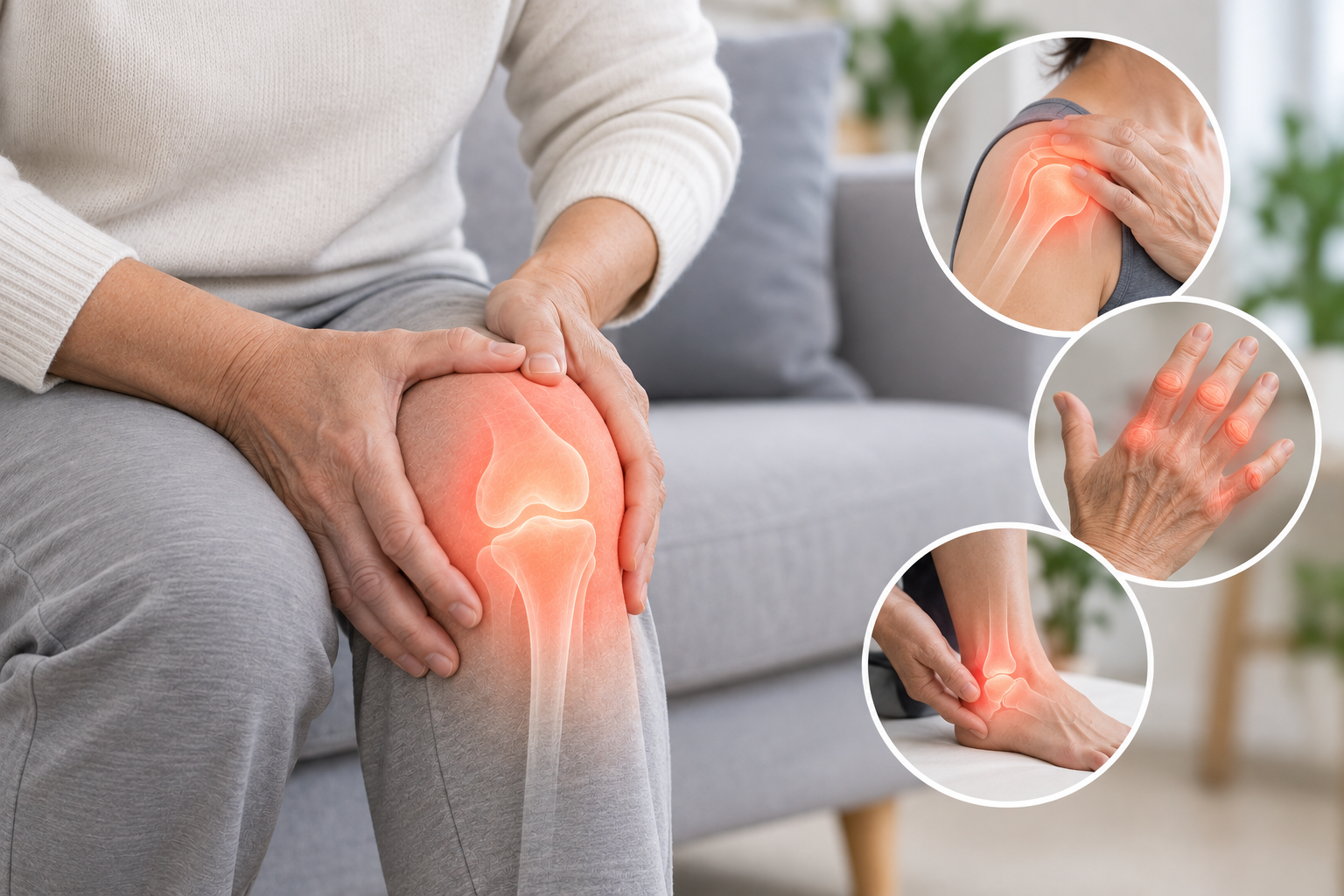
TENS for Arthritis: Does It Help and How to Use It Safely?
If you are considering TENS for arthritis pain, the most important thing to know is that TENS may provide temporary symptom relief for some people, but it does not treat or reverse arthritis. The NHS includes TENS among options that may help certain types of pain, including pain caused by arthritis, but also states that it does not work for everyone.
There is an important evidence distinction to keep in mind. NICE currently recommends not offering TENS for osteoarthritis because there is insufficient evidence of benefit. For rheumatoid arthritis, NHS guidance says a physiotherapist may use TENS as one of several approaches that can help with pain relief.
So, if you are exploring a TENS machine for arthritis pain, think of it as a possible short-term pain-management tool rather than a treatment for the underlying joint disease.
What is TENS and how can it be used for arthritis?
TENS stands for transcutaneous electrical nerve stimulation. A small battery-powered device sends mild electrical pulses through adhesive electrode pads placed on the skin.
The NHS explains that TENS can provide temporary pain relief by passing a weak electrical current to the nerves. It may help certain short- and long-term pain conditions, including arthritis, although it does not work for everyone.
The sensation normally feels like tingling, buzzing or pulsing beneath the electrodes. The intensity can usually be adjusted so that the sensation is noticeable without becoming painful.
For someone living with arthritis, the potential attraction is straightforward: TENS is portable, non-invasive and controlled by the user. The Royal National Orthopaedic Hospital describes TENS as non-invasive, relatively inexpensive and patient-controlled, while noting that it provides short-term relief rather than curing pain.
Does TENS help arthritis pain?
The answer depends partly on what you mean by “help”.
TENS may temporarily reduce the sensation of pain for some people, but the evidence is not strong enough to say that it reliably benefits everyone with arthritis.
The NHS specifically says TENS can help relieve certain types of pain caused by conditions such as arthritis, but also makes clear that it does not work for everyone.
For osteoarthritis, the evidence needs particularly careful interpretation. NICE’s current osteoarthritis guideline says not to offer TENS because there is insufficient evidence of benefit.
For rheumatoid arthritis, NHS guidance says physiotherapy may include pain-relief approaches such as TENS.
This means it would be misleading to describe TENS as a proven treatment for arthritis itself. A more accurate description is that some people may find it useful for temporary symptom management.
TENS does not treat the underlying arthritis
One of the biggest misconceptions about arthritis pain TENS therapy is that electrical stimulation can repair damaged cartilage, remove inflammation or reverse joint changes.
It cannot be presented that way.
For osteoarthritis, NHS guidance explains that the condition is long-term and cannot currently be cured, although treatments can help relieve symptoms. Exercise is one of the most important treatments, alongside other appropriate management strategies.
TENS works at the level of pain sensation. Even if you experience temporary relief while using it, that does not mean that the underlying joint condition has changed.
This distinction is particularly important when deciding whether to purchase a machine. You are buying a pain-management device, not a device that treats the cause of arthritis.
Why might someone consider TENS for arthritis?
There are several practical reasons people explore TENS.
Temporary pain relief
TENS may help some people manage pain for a period of time. The Royal National Orthopaedic Hospital describes the benefit as short-term relief while the machine is switched on.
Portable use
TENS machines are generally small and battery powered. This makes them relatively convenient to use at home or, where appropriate, while moving around.
Non-invasive approach
Unlike injections or surgery, TENS does not involve penetrating the skin or taking medication.
User-controlled intensity
You can generally adjust the intensity according to how the stimulation feels. NHS guidance recommends starting low and gradually increasing the intensity until you feel tingling that is not painful.
However, these practical advantages do not mean TENS is appropriate for everyone.
Which types of arthritis are relevant?
“Arthritis” is a broad term rather than one single condition. NHS guidance lists several types, including osteoarthritis, rheumatoid arthritis, gout, psoriatic arthritis and ankylosing spondylitis.
That matters because evidence and treatment recommendations can differ between conditions.
Osteoarthritis
Osteoarthritis commonly causes joint pain and stiffness and can restrict movement. NICE recommends therapeutic exercise and, where appropriate, weight management as core treatments. It currently recommends against offering TENS for osteoarthritis because of insufficient evidence of benefit.
Rheumatoid arthritis
Rheumatoid arthritis is an inflammatory condition that can cause joint pain, swelling and stiffness. NHS guidance says physiotherapy can include pain relief using TENS as part of symptom management.
Because different forms of arthritis require different management, do not assume that advice for one type automatically applies to another.
If you have unexplained joint pain, swelling or stiffness, the NHS advises against self-diagnosing and recommends speaking with a GP or appropriate healthcare professional.
How to use a TENS machine for arthritis pain
If TENS has been recommended or you have decided to try it appropriately, setup is relatively straightforward.
1. Check the machine before use
Make sure the battery has enough power and the leads and electrode pads are in good condition.
If you are buying a machine, the NHS recommends checking for a CE or UKCA mark.
2. Wash and dry the skin
Electrodes should be placed on clean, dry skin.
Avoid applying creams or oils directly underneath the pads, as these can affect adhesion.
3. Switch the machine off
The NHS advises making sure the TENS machine is switched off before attaching the electrodes.
4. Position the electrode pads
Place the electrodes near the painful area, leaving a gap between them.
The exact placement depends on the affected joint, the machine and the guidance you have received. A healthcare professional can demonstrate suitable placement if you are unsure.
5. Switch the machine on
Once the pads are securely positioned, turn the machine on.
6. Increase the intensity gradually
Start at a low level and slowly increase it until you feel a clear tingling sensation.
It should not be painful.
7. Monitor your skin and comfort
If your skin becomes itchy, irritated or red, switch the machine off and remove the pads.
Where should TENS pads go for arthritis pain?
There is no single electrode pattern that applies to every arthritic joint.
The general principle is to place the pads on or around the painful area, while following the instructions for your particular machine and avoiding areas where TENS should not be used.
For example, someone using TENS around a knee may position electrodes around the painful area rather than directly over a particularly sensitive point. Similar principles may apply to other joints, but the exact arrangement depends on the location and circumstances.
If your arthritis affects the shoulder, remember that standard TENS should not be placed on the neck. The NHS advises against using TENS on the neck, mouth or eyes.
If your joint is swollen, unusually hot, damaged or has reduced sensation, do not simply place electrodes over it and continue. Seek appropriate advice first.
How far apart should electrode pads be?
Electrode spacing matters because pads should not be touching.
The Royal National Orthopaedic Hospital recommends positioning TENS pads either side of the painful area and keeping them at least 2.5 cm (1 inch) apart.
When working around a smaller joint, it can be tempting to put electrodes extremely close together. Instead, follow your machine’s instructions and make sure there is an appropriate gap.
If you are unsure about placement around a particular joint, a physiotherapist or other healthcare professional can demonstrate an appropriate arrangement.
How long can TENS be used for arthritis pain?
There is no single session length that is appropriate for everyone.
The Royal National Orthopaedic Hospital advises a maximum of 60 minutes at a time, usually up to three times a day, and says that users must not fall asleep with the machine switched on.
Other NHS guidance can differ, so your machine’s instructions and individual professional advice should take priority.
A sensible approach is to begin with a manageable session and assess whether you actually notice useful relief. Longer use is not automatically better.
Never use TENS while sleeping, and do not use it in the bath or shower, while driving or while operating tools or machinery.
What should TENS feel like?
TENS should normally produce a noticeable tingling or buzzing sensation.
The NHS recommends slowly increasing the intensity until you feel tingling that is not painful.
The Royal National Orthopaedic Hospital describes the desired sensation as strong but comfortable.
If you experience pain rather than comfortable stimulation:
- Reduce the intensity.
- Check that the electrodes are correctly positioned.
- Check the condition of the pads.
- Make sure the electrodes are not touching.
- Stop the session if the problem continues.
Do not assume that turning the intensity to its highest level will produce better arthritis pain relief.
Common mistakes when using TENS for arthritis
Using TENS correctly is more important than simply owning a machine.
Using worn electrode pads
Reusable pads gradually lose their adhesive properties. If they no longer stick properly, stimulation can become inconsistent.
Increasing intensity too quickly
Start low and increase gradually. Painful stimulation is not the goal.
Putting electrodes on unsuitable skin
Do not use TENS on irritated, broken, infected or numb skin.
Using TENS in prohibited locations
The NHS advises against using TENS on the neck, mouth or eyes and against using it across the chest and back simultaneously.
Ignoring the cause of new joint pain
If you have not been diagnosed with arthritis, do not assume every painful or swollen joint is arthritis. NHS guidance specifically advises against self-diagnosis.
Expecting a cure
TENS may provide temporary pain relief, but it does not cure arthritis.
For a more detailed guide to equipment-related problems, read our article on why a TENS machine can feel weak and what to check.
When should you avoid TENS?
The NHS says you should not use TENS if you have:
- Epilepsy.
- A pacemaker.
- Pregnancy unless your doctor or midwife advises you to use it.
You should also avoid using TENS:
- On irritated, broken or infected skin.
- On numb areas.
- On the neck.
- Around the mouth or eyes.
- While sleeping.
- In the bath or shower.
- While driving.
- While operating tools or machinery.
If you have an implanted electronic device or another medical condition that may affect whether electrical stimulation is appropriate, ask your healthcare professional before using TENS.
What if an arthritic joint is swollen or in a flare?
Do not assume that TENS is appropriate simply because the pain is worse than usual.
Arthritis can involve episodes where symptoms suddenly become worse. NHS guidance notes that arthritis can cause flare-ups, and different types of arthritis have different management requirements.
If a joint becomes suddenly very painful, swollen, hot or red, particularly if you feel unwell or have a high temperature, seek medical advice rather than relying on a TENS machine. NHS guidance recommends urgent assessment for severe pain and swelling in one joint that starts suddenly, or for a hot or swollen joint accompanied by feeling generally unwell.
TENS may alter the sensation of pain, but masking pain should not prevent you from seeking assessment when symptoms suggest something needs attention.
TENS compared with broader arthritis management
TENS should generally be considered as one possible symptom-management option rather than the centre of an arthritis treatment plan.
| Approach | Main purpose | Important consideration |
| TENS | Temporary pain relief for some people | Evidence varies; not a cure |
| Therapeutic exercise | Improve strength, movement and function | Core treatment for osteoarthritis |
| Medication | Pain and symptom management | Should be selected appropriately |
| Physiotherapy | Exercise, function and symptom management | Can be tailored to the individual |
| Weight management where appropriate | Reduce symptoms and improve function in osteoarthritis | Relevant when overweight or obese |
| Surgery | Address severe structural joint problems in selected cases | Only appropriate in specific circumstances |
For osteoarthritis, NICE identifies therapeutic exercise and weight management where appropriate as core treatments, while recommending against TENS because evidence of benefit is insufficient.
NHS guidance similarly identifies regular exercise as an important part of managing osteoarthritis symptoms.
This context is important: buying a TENS machine should not mean replacing evidence-based arthritis management with electrical stimulation.
Choosing a TENS machine for arthritis pain
If you decide that a TENS machine is appropriate for you, focus on practical features rather than exaggerated claims.
Adjustable intensity
A machine should allow you to increase stimulation gradually and comfortably.
Multiple programmes
Different programmes can give you more flexibility, although more programmes do not automatically mean better results.
Easy-to-use controls
Simple controls make it easier to adjust the stimulation without confusion.
Portable design
A small, battery-powered device can be convenient for appropriate use away from home.
Compatible electrode pads
This is particularly important. Replacement pads are an ongoing part of using a TENS machine, so check the connector type and availability before buying.
Timer
A timer can make it easier to manage defined sessions, although it does not replace following the manufacturer’s usage instructions.
CE or UKCA marking
The NHS recommends checking for CE or UKCA marking when buying a TENS machine in the UK.
For a broader buying guide, see our article on TENS machine features and what to look for before you buy.
TENS Machines; Replacement Electrode Pads
If you are considering TENS for ongoing pain management, remember that the machine is only one part of the setup.
TensLeads offers TENS Machines; Replacement Electrode Pads in different configurations and sizes. The range includes portable TENS machines and reusable electrode pads designed for compatible TENS systems.
Replacement pads are worth considering before you buy because electrode adhesion can decline with repeated use. Choosing a machine with readily available compatible pads can make long-term use simpler.
Always check the connector type and compatibility before purchasing replacement electrode pads or leads.
Explore TENS Machines; Replacement Electrode Pads
Explore TENS Machines; Replacement Electrode Pads
Frequently Asked Questions
Does TENS help arthritis pain?
TENS may provide temporary pain relief for some people with arthritis, but it does not work for everyone and does not cure arthritis. The NHS says TENS can help with certain types of pain, including pain caused by arthritis. However, NICE currently recommends not offering TENS for osteoarthritis because there is insufficient evidence of benefit.
Where should TENS pads go for arthritis pain?
Pads are generally placed on or around the painful area, with a gap between electrodes and according to your machine’s instructions. The exact position depends on the affected joint and your circumstances. Do not use TENS on the neck, mouth or eyes, or on broken, infected, irritated or numb skin.
How long can TENS be used for arthritis pain?
Usage varies between people and devices. The Royal National Orthopaedic Hospital recommends a maximum of 60 minutes at a time, usually up to three times a day, while other NHS guidance may differ. Follow your machine’s instructions and any advice from your healthcare professional. Do not sleep with TENS switched on.
Can TENS cure arthritis?
No. TENS is a pain-management technique and does not cure arthritis or reverse joint changes. For osteoarthritis, NICE recommends therapeutic exercise and appropriate weight management as core treatments.
Can I use TENS during an arthritis flare?
Do not assume that TENS is appropriate during every flare. If a joint becomes suddenly very painful, hot or swollen, or you feel generally unwell, seek medical advice rather than relying on TENS.
Can TENS be used for rheumatoid arthritis?
NHS guidance says a physiotherapist may help with rheumatoid arthritis pain using TENS. Whether it is appropriate for you depends on your condition and individual circumstances.
Can I use TENS every day for arthritis pain?
Some people use TENS regularly, but frequency and session length should follow your machine’s instructions and professional advice. Do not assume that more frequent or longer use will provide better results.
Key Takeaways
- TENS for arthritis pain may provide temporary relief for some people, but it does not cure arthritis.
- The NHS recognises TENS as a possible option for certain types of pain, including arthritis pain, while noting that it does not work for everyone.
- NICE currently recommends not offering TENS for osteoarthritis because there is insufficient evidence of benefit.
- NHS guidance for rheumatoid arthritis includes TENS as a possible pain-relief approach delivered with physiotherapy.
- Place electrode pads on or around the painful area, following your machine’s instructions.
- Keep electrodes separated and use clean, dry and intact skin.
- Never place standard TENS pads on the neck, mouth or eyes.
- Start at a low intensity and increase gradually towards a noticeable but comfortable tingling sensation.
- Replace worn electrode pads when they no longer adhere properly.
- Check leads, batteries and connectors if stimulation feels unusually weak.
- TENS should complement appropriate arthritis management rather than replace exercise, professional care or prescribed treatment.
- Seek medical advice for unexplained, persistent, worsening or unusually severe joint symptoms.
Safety Disclaimer
This article is for general information only and is not a substitute for diagnosis or individual medical advice. TENS does not work for everyone and is not a cure for arthritis. Do not use TENS if you have a pacemaker or epilepsy, and during pregnancy unless advised by a doctor or midwife. Do not use it on broken, infected, irritated or numb skin, or on the neck, mouth or eyes. Do not use TENS while sleeping, bathing, driving or operating machinery. If you have unexplained joint pain, sudden severe pain or swelling, a hot or red joint, or feel unwell, seek appropriate medical advice rather than relying on TENS. Always follow the instructions supplied with your device and speak with a healthcare professional if you are unsure whether TENS is suitable for you.