
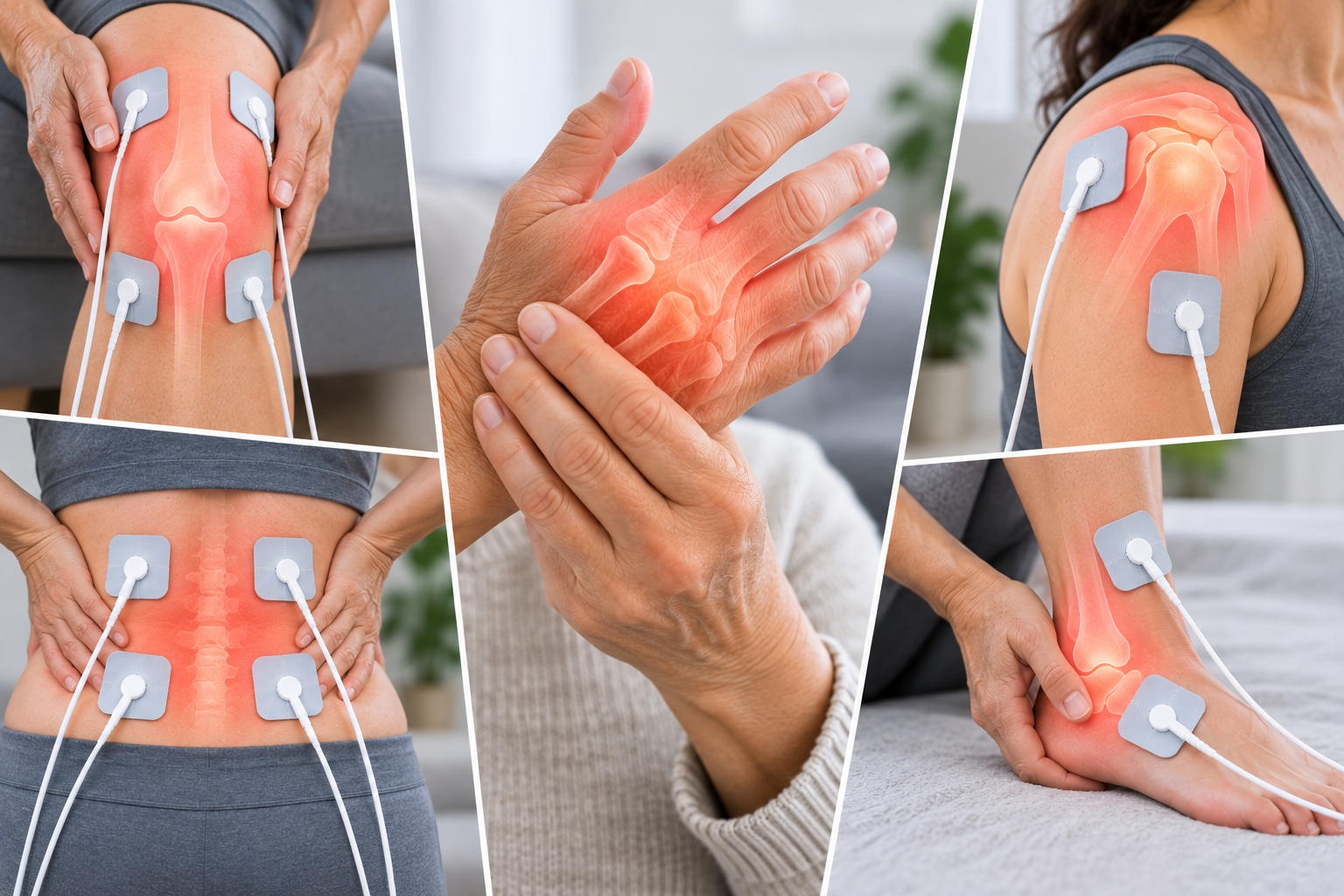
TENS for Osteoarthritis: Does It Help and How to Use It Safely
Osteoarthritis is a long-term condition that commonly causes joint pain, stiffness and difficulty moving. It most often affects the knees, hips and small joints of the hands, although almost any joint can be affected. (nhs.uk) If you are considering TENS for osteoarthritis, you may be wondering whether electrical stimulation can actually help with the pain and how to use a TENS machine safely.
The important point is that the evidence for TENS in osteoarthritis is limited. The NHS says TENS may help with certain types of pain, including arthritis-related pain, but it does not work for everyone. (nhs.uk) However, NICE specifically recommends not offering TENS for osteoarthritis because there is insufficient evidence of benefit. (NICE)
That means TENS should not be presented as a proven treatment for osteoarthritis itself. If you choose to try it, think of it as a possible short-term pain-management option rather than a treatment that repairs joints or changes the underlying condition.
Quick answer: Does TENS help osteoarthritis?
TENS may provide temporary pain relief for some people, but it is not effective for everyone and current NICE guidance does not recommend routinely offering TENS for osteoarthritis because the evidence is insufficient. (NICE)
If you use TENS, place the electrodes on or around the painful area according to your machine’s instructions or advice from a healthcare professional. Keep the pads separated, use them only on suitable skin and start with a low intensity before gradually increasing it to a strong but comfortable tingling sensation. (Royal National Orthopaedic Hospital)
TENS should complement, rather than replace, appropriate osteoarthritis management. Regular exercise and maintaining a healthy weight where appropriate are important parts of managing osteoarthritis symptoms. (nhs.uk)
What is osteoarthritis?
Osteoarthritis occurs when the tissues within a joint become affected over time. It can cause pain, stiffness, tenderness, swelling and problems with movement. Symptoms can vary considerably between people and between different joints. (nhs.uk)
The knees, hips and small joints of the hands are particularly commonly affected.
Because joint pain can have many different causes, it is important not to assume that every painful joint is osteoarthritis. The NHS recommends seeing a GP if you have persistent symptoms so that the cause can be assessed and appropriate treatment considered. (nhs.uk)
This matters when considering a TENS machine for osteoarthritis. TENS may change how pain is experienced, but it does not establish what is causing the pain.
What is TENS?
Transcutaneous electrical nerve stimulation, or TENS, is a treatment that uses a small battery-powered device to deliver weak electrical impulses through electrodes attached to the skin.
The NHS describes TENS as a treatment that can provide temporary pain relief. It may help certain short- and long-term pain conditions, including pain associated with arthritis, although it does not work for everyone. (nhs.uk)
You control the stimulation using the machine. The sensation is usually described as tingling or buzzing rather than painful electrical shocks.
A TENS system generally consists of:
- A TENS control unit.
- Leads, depending on the device.
- Sticky electrode pads.
- A battery or rechargeable power source.
- Different programmes or intensity controls, depending on the model.
For people researching osteoarthritis tens therapy, the key distinction is that TENS is aimed at pain management. It does not rebuild cartilage, reverse osteoarthritis or cure the condition.
What does the evidence say about TENS for osteoarthritis?
This is where a careful distinction is important.
The NHS includes arthritis among conditions for which TENS may provide pain relief. (nhs.uk) Some NHS clinical resources also describe TENS as potentially useful for arthritic pain. (Royal National Orthopaedic Hospital)
However, NICE’s osteoarthritis guideline takes a more cautious position. Its evidence review found insufficient quality evidence to establish a clear clinical benefit from electrotherapy, including TENS, and the guideline recommends not offering TENS for osteoarthritis. (NICE)
So, if you search online for “TENS for osteoarthritis”, you may find claims that it is an effective treatment. Those claims should be treated carefully.
The realistic expectation: TENS might provide temporary symptom relief for some individuals, but there is not strong enough evidence to describe it as an established treatment for osteoarthritis.
This is particularly important when comparing TENS with the core approaches recommended for osteoarthritis.
What should you use alongside TENS?
Osteoarthritis management is broader than pain relief alone.
The NHS recommends regular exercise and, where appropriate, weight management as important ways of managing osteoarthritis. (nhs.uk) Depending on symptoms, treatment may also involve medicines, physiotherapy, assistive devices or surgery. (nhs.uk)
A sensible way to think about TENS is therefore:
| Approach | Main purpose | Place in osteoarthritis care |
| Exercise | Maintains movement and strength | Important part of management |
| Weight management where appropriate | Can reduce strain on weight-bearing joints | Important where relevant |
| Medicines | Pain and symptom management | May be recommended by a healthcare professional |
| Physiotherapy | Exercise, movement and functional support | May be useful depending on symptoms |
| TENS | Potential temporary pain relief | Evidence is limited for osteoarthritis |
| Surgery | Addresses severe joint problems | Considered in selected cases |
TENS should not become a reason to stop moving or abandon an exercise programme that has been recommended for you.
How might TENS provide pain relief?
TENS works through electrical stimulation delivered through electrodes placed on the skin. The NHS explains that TENS is thought to help by affecting pain signals travelling through nerves and encouraging the body to release natural pain-relieving chemicals called endorphins. (nhs.uk)
The Royal National Orthopaedic Hospital similarly explains that TENS may reduce pain signals and can provide short-term relief while the machine is switched on. (Royal National Orthopaedic Hospital)
However, these mechanisms should not be confused with treating the underlying osteoarthritis.
TENS does not:
- Repair damaged cartilage.
- Reverse osteoarthritis.
- Permanently remove joint pain.
- Cure osteoarthritis.
- Replace appropriate medical treatment.
If it helps you, the benefit should be viewed primarily as symptom relief.
How to use TENS for osteoarthritis safely
If you have decided to try TENS, correct setup is important.
1. Check that TENS is appropriate for you
If you are unsure what is causing your joint pain, speak to a healthcare professional before using TENS. The NHS specifically recommends professional advice if you are uncertain about the cause of your pain. (nhs.uk)
You should also seek advice before using TENS if you have certain medical conditions or implanted devices.
The NHS advises against TENS if you have epilepsy or a pacemaker, and says pregnancy should only be considered with advice from a doctor or midwife. (nhs.uk)
2. Prepare your skin
Apply electrodes to clean, dry and intact skin.
Do not place them over irritated, broken, infected or numb skin. (nhs.uk)
Avoid applying creams or oils immediately underneath the electrodes, as these can affect adhesion.
3. Switch the machine off before attaching the pads
Attach the electrode pads while the machine is switched off.
Once the electrodes are positioned correctly, switch the machine on and adjust the settings gradually. The NHS recommends switching the device off before applying or removing the pads. (nhs.uk)
4. Position the electrode pads correctly
The general principle is to place electrodes on or around the painful area.
The Royal National Orthopaedic Hospital recommends positioning pads either side of the painful area, at least 2.5 cm apart. (Royal National Orthopaedic Hospital)
Exact positioning can depend on the affected joint, electrode size and individual circumstances. If you are unsure where to place the pads, a GP, physiotherapist or other healthcare professional can provide guidance. (nhs.uk)
Where should TENS pads go for osteoarthritis?
There is no single placement pattern that applies to every person with osteoarthritis.
For a painful knee, for example, electrodes may be positioned around the painful region rather than directly over unsuitable structures. Similar principles apply to other joints, but placement should take account of the specific joint and your device’s instructions.
Keep the electrodes separated and never place standard TENS pads:
- On the front or sides of the neck.
- Over the mouth or eyes.
- On irritated, broken, infected or numb skin.
- On the chest and back simultaneously.
These precautions are consistent with NHS TENS guidance. (nhs.uk)
For more detailed guidance, see our article on Best TENS Pad Placement for Arthritis.
5. Start with a low intensity
The first sensation should not be painful.
The NHS recommends gradually increasing the intensity until you feel tingling that is not painful. The Royal National Orthopaedic Hospital describes the desired sensation as strong but comfortable. (nhs.uk)
A useful approach is:
Low intensity → gradual increase → strong but comfortable tingling.
If stimulation becomes painful or uncomfortable, reduce the intensity.
There is no advantage in assuming that the highest setting is the most effective setting.
6. Use an appropriate programme
Some TENS machines have preset programmes, while others allow manual adjustment of stimulation characteristics.
There is no universally proven “best” TENS programme for osteoarthritis. Since NICE does not recommend TENS as a routine osteoarthritis treatment due to insufficient evidence, it would be misleading to prescribe one particular setting as clinically proven. (NICE)
If your machine has preset programmes, follow the manufacturer’s instructions. If a physiotherapist or other healthcare professional has recommended particular settings, follow their advice.
7. Keep sessions within appropriate limits
TENS duration can vary depending on the device and clinical guidance.
The Royal National Orthopaedic Hospital advises using TENS for a maximum of 60 minutes at a time, usually up to three times a day, and specifically says not to fall asleep with the machine switched on. (Royal National Orthopaedic Hospital)
Other NHS guidance may use different starting schedules, so always check the instructions supplied with your particular machine.
Never use TENS while sleeping.
How long can TENS be used for osteoarthritis?
There is no single duration that is appropriate for everyone.
As one NHS hospital example, the Royal National Orthopaedic Hospital recommends a maximum of 60 minutes per session, usually up to three times daily. (Royal National Orthopaedic Hospital)
However, your machine’s instructions and any individual advice from a healthcare professional should take priority.
Longer use is not automatically better. RNOH warns that prolonged use without regular breaks, excessive current or incorrect electrode placement can contribute to skin damage and burns. (Royal National Orthopaedic Hospital)
When should you stop using TENS?
Stop the treatment if it becomes painful or your skin develops significant irritation.
The NHS advises switching the machine off and removing the pads if the skin becomes itchy, irritated or red. (nhs.uk)
You should also stop and seek appropriate advice if your symptoms change significantly or you develop symptoms that do not fit your usual pattern.
Do not simply increase the intensity because the usual setting no longer seems effective.
TENS safety: situations to avoid
Standard TENS should not be used in certain situations.
According to NHS guidance, avoid TENS:
- On irritated, broken, infected or numb skin.
- On the neck, mouth or eyes.
- On the chest and back at the same time.
- While sleeping.
- In the bath or shower.
- While driving.
- While using tools or machinery. (nhs.uk)
RNOH also advises against use over areas such as varicose veins and warns about burns or skin damage from excessive current, incorrect placement, electrodes positioned too close together or prolonged use without breaks. (Royal National Orthopaedic Hospital)
If you have a pacemaker, epilepsy, heart problem, pregnancy or an implanted electrical or metal device, seek appropriate medical advice before using TENS. (Royal National Orthopaedic Hospital)
How to choose a TENS machine for osteoarthritis
If you are considering a TENS machine for osteoarthritis, focus on practical features rather than assuming that a machine with more programmes will produce better medical results.
Useful features to consider
- Adjustable intensity.
- Easy-to-use controls.
- Suitable number of channels.
- Comfortable and appropriately sized electrodes.
- Compatible replacement pads.
- Reliable leads and connectors.
- Timer functions.
- Portable design if you need to use it away from home.
- Clear operating instructions.
- CE or UKCA marking when purchasing in the UK.
The NHS recommends checking for CE or UKCA marking when buying a TENS machine. (nhs.uk)
Because electrode pads are consumable, also consider how easily you can obtain compatible replacements.
Electrode pads for osteoarthritis: why compatibility matters
Good electrode contact is important for consistent TENS use.
Over time, reusable pads lose their adhesive properties and need replacing. If pads no longer stick properly, stimulation may become inconsistent and you may be tempted to increase the intensity unnecessarily.
Before purchasing electrode pads for osteoarthritis, check:
- Pad dimensions.
- Connector type.
- Whether the pads are reusable.
- Compatibility with your TENS machine.
- Number of pads supplied.
- Replacement cost.
Avoid assuming that every TENS electrode will fit every machine.
A simple TENS checklist for osteoarthritis
Before each session, check:
- Is TENS appropriate for my situation?
- Have I checked my machine’s instructions?
- Is my skin clean, dry and intact?
- Are my electrodes in suitable positions?
- Are the electrodes separated?
- Are my pads still sticking properly?
- Are my leads undamaged?
- Is the machine switched off while I attach the pads?
- Have I started at a low intensity?
- Does the stimulation feel strong but comfortable rather than painful?
- Am I staying within the recommended session duration?
- Am I awake and not driving or operating machinery?
- Have I stopped if my skin becomes irritated?
This simple routine can prevent many of the avoidable problems associated with TENS use.
Does TENS help osteoarthritis?
TENS may provide temporary pain relief for some people, but it does not work for everyone. The NHS includes arthritis among the types of pain for which TENS may help. (nhs.uk)
However, NICE recommends not offering TENS for osteoarthritis because there is insufficient evidence of benefit. (NICE)
Therefore, TENS should not be described as a proven osteoarthritis treatment or a replacement for established approaches such as exercise and appropriate weight management.
Where should TENS pads go for osteoarthritis?
Place the electrodes on or around the painful area, following your machine’s instructions or advice from a healthcare professional. RNOH recommends placing pads either side of the painful area and keeping them at least 2.5 cm apart. (Royal National Orthopaedic Hospital)
Do not place standard TENS pads on the neck, mouth or eyes, or over broken, infected, irritated or numb skin. (nhs.uk)
How long can TENS be used for osteoarthritis?
Duration depends on the machine and individual guidance. RNOH recommends a maximum of 60 minutes at a time, usually up to three times daily, and advises against sleeping with TENS switched on. (Royal National Orthopaedic Hospital)
Always follow your device’s instructions and any advice from your healthcare professional.
Can TENS cure osteoarthritis?
No. TENS is intended as a pain-management technique and does not repair cartilage, reverse osteoarthritis or cure the condition.
Osteoarthritis is a long-term condition, and the NHS recommends approaches such as regular exercise and weight management where appropriate to help manage symptoms. (nhs.uk)
Can I use TENS instead of exercise for osteoarthritis?
TENS should not be considered a replacement for appropriate exercise or other recommended osteoarthritis management.
Regular exercise can help maintain muscle strength and manage osteoarthritis symptoms. (nhs.uk) If a healthcare professional has given you an exercise programme, continue to follow their advice unless they tell you otherwise.
Can TENS reduce osteoarthritis inflammation?
Do not assume that TENS treats the underlying joint changes or inflammation associated with osteoarthritis. Its intended role is pain management, and current NICE guidance does not recommend routinely offering TENS for osteoarthritis because the evidence of benefit is insufficient. (NICE)
What if TENS does not help my osteoarthritis pain?
Do not continually increase the intensity or use TENS for longer simply because you are not getting the expected relief.
TENS does not work for everyone. (nhs.uk) If your pain is persistent, worsening or affecting your daily activities, discuss it with a healthcare professional so that your overall treatment can be reviewed.
When should osteoarthritis pain be medically assessed?
Persistent joint symptoms should be assessed if you have not already received an appropriate diagnosis. (nhs.uk)
Seek urgent NHS advice if a joint becomes swollen and hot, particularly if you also feel generally unwell or have a high temperature. (nhs.uk)
Do not use TENS simply to mask symptoms that could require medical assessment.
TENS Machines; Replacement Electrode Pads
If you decide to explore TENS as part of your personal pain-management approach, choosing a suitable machine and keeping compatible electrodes available can make regular use more convenient.
TensLeads offers TENS Machines; Replacement Electrode Pads for different equipment and user requirements. When selecting replacement electrodes, always check the connector and compatibility specifications for your machine.
Well-maintained electrodes should sit securely against clean, dry skin. If pads have stopped adhering properly, replacing them is preferable to compensating by repeatedly increasing the stimulation intensity.
Explore TENS Machines; Replacement Electrode Pads
Explore TENS Machines; Replacement Electrode Pads
Key Takeaways
- TENS for osteoarthritis is not a proven treatment for the underlying condition.
- The NHS says TENS may provide temporary relief for certain types of pain, including arthritis-related pain, but it does not work for everyone. (nhs.uk)
- NICE recommends not offering TENS for osteoarthritis because there is insufficient evidence of benefit. (NICE)
- If you use TENS, treat it as a potential pain-management tool rather than a cure.
- Place electrodes on or around the painful area and keep them appropriately separated.
- Use only clean, dry and intact skin.
- Never use standard TENS pads on the neck, mouth or eyes.
- Start at a low intensity and gradually increase it to a strong but comfortable sensation.
- Do not assume that stronger stimulation provides better results.
- Follow your machine’s instructions for session duration.
- RNOH recommends no more than 60 minutes at a time and usually up to three times daily. (Royal National Orthopaedic Hospital)
- Do not use TENS while sleeping, bathing, driving or operating machinery. (nhs.uk)
- Keep replacement electrodes compatible with your machine readily available.
- Continue appropriate osteoarthritis management such as exercise and weight management where relevant. (nhs.uk)
- Seek medical advice if symptoms are persistent, changing or unusually severe.
Safety Disclaimer
This article is for general information only and is not a substitute for diagnosis or personalised medical advice. TENS does not cure osteoarthritis and may not work for everyone. Do not use TENS if you have a pacemaker or epilepsy, and during pregnancy unless advised by a doctor or midwife. Do not use it on broken, infected, irritated or numb skin, or on the neck, mouth or eyes. Do not use TENS while sleeping, bathing, driving or operating machinery. If you are unsure whether TENS is suitable for you, speak to a GP, physiotherapist or other qualified healthcare professional. If a joint becomes suddenly very painful, swollen or hot, particularly if you feel unwell, seek urgent medical advice. (nhs.uk)