
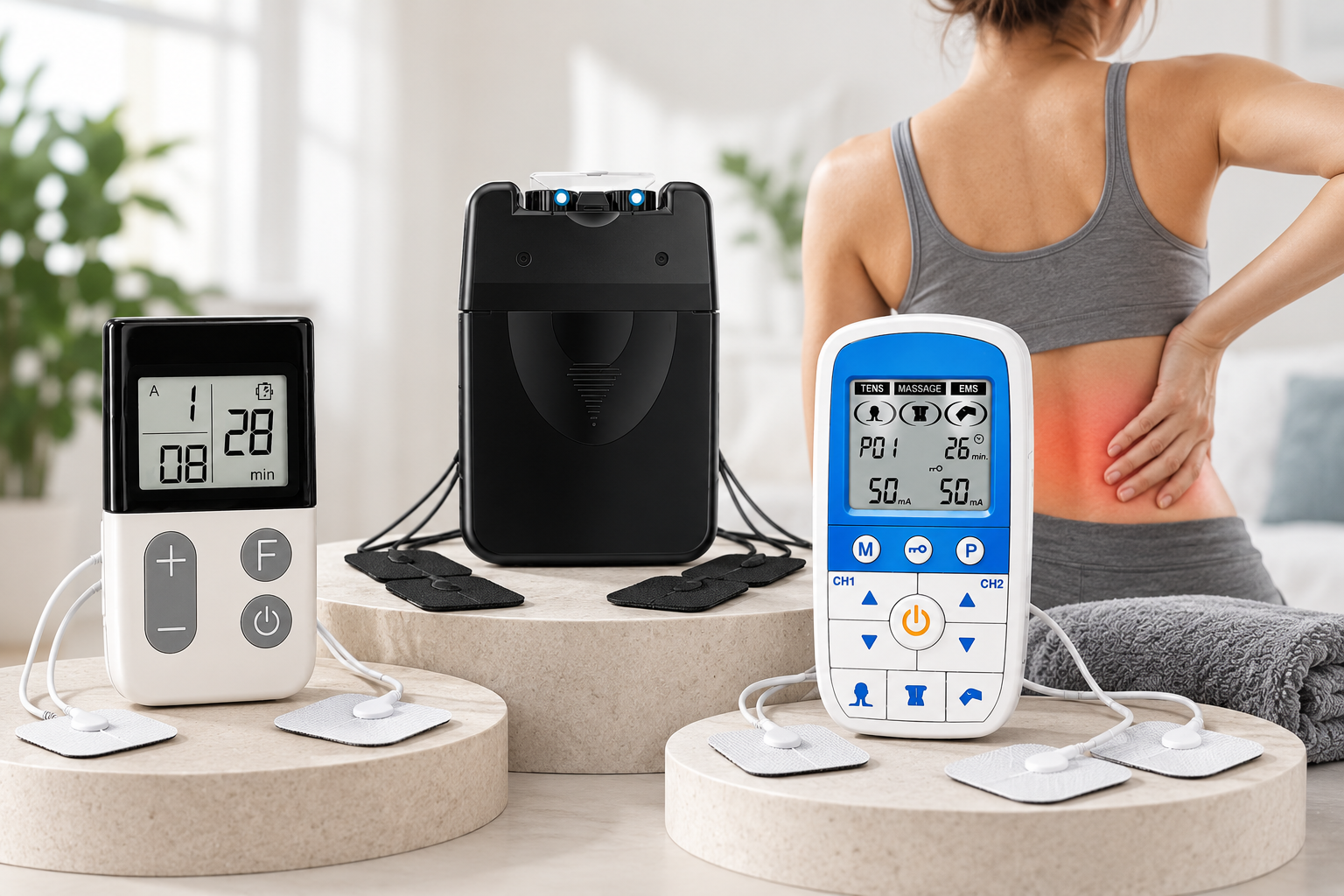
Best TENS Machine for Lower Back Pain: UK Buying Guide
If you are looking for the best TENS machine for lower back pain, it is worth looking beyond claims about pain relief and comparing the features that affect everyday use. Intensity control, electrode compatibility, pad placement, portability, programmes, channels and the ongoing cost of replacement pads can all make a difference to how practical a device is.
However, there is an important medical consideration before buying. NICE recommends that TENS should not be offered for managing low back pain, with or without sciatica. Its evidence review concluded that there was insufficient evidence of clinical benefit to support TENS for low back pain.
The NHS describes TENS as a treatment that can provide temporary pain relief for some types of pain, but stresses that it does not work for everyone.
So, if you are considering a TENS machine for lower back pain, choose based on practical features, safe operation and compatibility rather than expecting a particular device to cure or treat the underlying cause of back pain.
What Is the Best TENS Machine for Lower Back Pain?
There is no single TENS machine that can objectively be called the best for everyone with lower back pain.
A good device should be straightforward to operate, offer enough intensity adjustment to find a comfortable level, work with suitable electrode pads and provide controls that match how you intend to use it.
For some users, a simple portable machine with clear controls may be preferable. Someone who wants more flexibility may prefer multiple programmes, adjustable settings or dual-channel operation.
The important point is that a greater number of features does not automatically make a machine more effective for lower back pain.
When comparing devices, consider:
- Intensity levels: Can you increase stimulation gradually?
- Channels: Do you need one or two independent electrode circuits?
- Programmes: Does the machine offer useful TENS modes without making operation unnecessarily complicated?
- Portability: Can you comfortably carry and operate it where you need it?
- Electrode compatibility: Can you easily obtain suitable replacement pads?
- Pad cost: What will replacement electrodes cost over time?
- Controls: Are the buttons and display easy to understand?
- Timer: Does the machine provide a useful session timer?
- Safety information: Are the instructions clear about contraindications and correct use?
These factors are generally more useful when comparing products than simply choosing the machine with the largest number of modes.
Important: TENS Is Not a Proven Treatment for Low Back Pain
Before spending money on a TENS device, it is important to understand the evidence.
NICE guideline NG59 states: “Do not offer transcutaneous electrical nerve stimulation (TENS) for managing low back pain with or without sciatica.”
NICE’s supporting evidence review found no clinical benefit across reported outcomes when TENS was compared with sham TENS or usual care in a mixed population, and concluded that the evidence was conflicting and insufficient to support using TENS for low back pain or sciatica.
This does not mean that every individual will experience no sensation or no temporary relief. The NHS explains that TENS can provide temporary pain relief and that it does not work for everyone.
It does mean that a responsible buying guide should not claim that a particular machine is clinically proven to treat lower back pain simply because it has more programmes, higher intensity levels or a particular electrode design.
What Should You Look for in a TENS Machine for Lower Back Pain?
Once you understand the limitations, the buying decision becomes much more straightforward.
Think about how you are actually going to use the machine. Will it stay at home? Do you want something compact enough to take to work? Do you need two independent channels? Are replacement pads readily available?
A machine that fits your routine is likely to be more practical than one with features you never use.
Intensity Control
Adjustable intensity is one of the most important practical features.
The NHS advises gradually increasing the stimulation until you feel a tingling sensation and says that TENS should not be painful.
A machine with multiple intensity levels gives you more opportunity to adjust the sensation gradually.
This does not mean that a machine with the highest number of intensity levels is medically superior. The numbers used by different manufacturers cannot necessarily be compared directly.
For example, “16 levels” on one device does not automatically mean that it produces twice as much useful stimulation as an eight-level device.
What matters is having sufficient control to find a comfortable setting.
Single-Channel vs Dual-Channel TENS Machines
Channels determine how many independent circuits of electrodes the machine can control.
A single-channel machine generally operates one pair of electrodes through one circuit.
A dual-channel machine can operate two electrode circuits independently, depending on the design.
For lower-back use, a dual-channel machine may offer additional flexibility because you can position two pairs of electrodes around a larger area when the device instructions permit it.
However, more channels are not automatically necessary.
| Feature | Single-channel | Dual-channel |
| Electrode circuits | One | Two independent circuits |
| Typical setup | One pair of pads | Two pairs of pads |
| Flexibility | Simpler | Greater placement flexibility |
| Controls | Usually straightforward | Potentially more settings to manage |
| Best for | Users wanting simplicity | Users wanting greater flexibility |
| Cost | Often lower | Can be higher |
Always follow the instructions supplied with your particular device regarding the number and positioning of electrodes.
Programmes and Modes
Many modern TENS machines offer multiple preset programmes.
These may vary the frequency, pulse width or pattern of stimulation. Some machines also provide manual adjustment.
Multiple programmes can be useful if you prefer experimenting with different sensations, but programme count should not be confused with clinical effectiveness.
A machine advertised with 20 or 30 programmes is not necessarily better for lower back pain than one with five well-designed TENS programmes.
If you are a beginner, clear controls may be more valuable than a large collection of complicated presets.
Frequency and Pulse Width Controls
Some machines allow you to adjust frequency and pulse width manually.
Frequency controls how frequently pulses are delivered, while pulse width refers to the duration of each individual pulse.
Changing these controls can change how TENS feels. However, there is no universally established combination that should be treated as the “best” setting for everyone with lower back pain.
If you want to understand these controls in more detail, see our guide to TENS settings for lower back pain.
The most sensible approach is to follow your machine’s instructions and, where applicable, advice from a healthcare professional.
Portability
Portability can be an important consideration if you do not want your TENS machine to remain beside your bed or sofa.
A compact device can be easier to store and transport. Wireless models can also reduce the inconvenience of lead wires, although you should still ensure that the electrodes are positioned safely and that you can operate the controls appropriately.
Consider:
- Overall size.
- Weight.
- Battery or rechargeable operation.
- Whether the controls can be used easily.
- Whether the electrodes remain securely attached.
- Whether the device can be stored safely.
- Whether you can read the display comfortably.
The NHS notes that TENS machines are portable and can be used for pain relief, but they should not be used while driving or operating tools or machinery.
Portability should therefore improve convenience, not encourage use in situations where TENS is unsafe.
Wired vs Wireless TENS Machines
Both wired and wireless designs have practical advantages.
Wired machines
Traditional TENS devices connect the control unit to the electrodes using lead wires.
Advantages can include:
- Familiar operation.
- Easy replacement of leads and electrodes.
- Flexible electrode positioning.
- Often straightforward controls.
The disadvantage is that wires can become inconvenient when moving around.
Wireless machines
Wireless TENS devices attach the stimulation unit directly to or near the electrodes.
Potential advantages include:
- Fewer wires.
- Greater portability.
- Compact design.
- Convenient use at home.
However, wireless operation does not change the fundamental safety requirements. You still need to use suitable electrode placement, avoid unsafe areas and follow the manufacturer’s instructions.
Electrode Pad Compatibility Matters
A TENS machine is only as practical as its electrode system.
When comparing the best TENS machine for lower back pain, check which pads the device uses and how easy those pads are to replace.
Different machines can use different connector types. Some use pin-style connections, while others use snap or stud connections. Some wireless systems use proprietary electrode arrangements.
Before purchasing, check:
- Connector type.
- Pin or stud size.
- Electrode dimensions.
- Whether replacement pads are readily available.
- Whether third-party compatible pads are supported.
- Approximate replacement-pad cost.
- Whether the pads are reusable.
For example, TensLeads offers a range of electrode pads in different sizes and connection types, including stud and pin-compatible options.
A pad that physically looks similar to your existing electrode is not necessarily compatible, so always check the specifications before ordering.
Choosing the Right Electrode Pads for Lower Back Pain
There is no need to choose an electrode simply because it is marketed as a “back pain pad”.
Instead, consider its size, shape, connector and intended placement.
Larger electrodes may cover a greater area, while smaller pads can offer more flexibility when positioning around a particular area.
TensLeads also sells butterfly-shaped electrodes designed with a central gel-free gap and intended for placement along either side of the spine. The product information specifies a 2 mm pin connection and compatibility with various wired TENS and EMS machines.
That product information should not be interpreted as clinical evidence that the electrode treats lower back pain. Placement should always follow the device instructions and appropriate professional guidance.
For general placement principles, see our guide to TENS pad placement for lower back pain.
Why Replacement-Pad Cost Should Be Part of Your Buying Decision
The purchase price of a TENS machine is not necessarily the total cost of ownership.
Reusable electrode pads eventually need replacing because the adhesive surface can lose its ability to maintain good contact with the skin.
If replacement pads are difficult to find or unusually expensive, a cheaper TENS machine may become less economical over time.
Before buying, compare:
Initial machine cost + replacement-pad cost + other required accessories
For example, TensLeads currently lists several replacement-pad options, including a size-variety pack and individual pad formats.
The exact pad lifespan will depend on factors such as skin preparation, storage, frequency of use and manufacturer guidance, so avoid assuming that every electrode will last the same amount of time.
What About TENS Leads?
If you choose a wired machine, the leads are another component worth considering.
Damaged or loose leads can affect electrical contact and make stimulation inconsistent.
Before buying, check whether replacement leads are readily available and whether the connector specifications are clearly stated.
TensLeads sells replacement lead wires with different connector configurations. One example uses a 2.5 mm male plug with a 2.0 mm pin electrode connection, but the product information specifically advises checking your device’s plug and electrode connection type before purchasing.
This is a useful reminder that compatibility should always be checked rather than assumed.
A TENS Machine Buying Comparison
| Feature | Basic machine | More flexible machine | What to consider |
| Intensity | Adjustable | More intensity levels | Gradual, comfortable adjustment |
| Channels | Single | Dual | Whether you need two independent circuits |
| Programmes | Few presets | Multiple presets/manual options | Ease of use vs flexibility |
| Frequency control | Preset | Adjustable | Useful if you want more control |
| Pulse width | Preset | Adjustable | Changes stimulation characteristics |
| Portability | Compact | Compact/wireless | Where you intend to use it |
| Timer | Basic or preset | Adjustable/automatic | Convenience and session control |
| Pads | Standard | Multiple compatible options | Replacement availability |
| Replacement cost | Varies | Varies | Consider long-term ownership |
| Controls | Simple | More advanced | Choose based on confidence and preference |
There is no requirement to buy the most feature-rich machine. Choose the specification that makes sense for how you intend to use it.
Is a Wireless TENS Machine Better for Lower Back Pain?
Not necessarily.
Wireless operation can be more convenient, particularly if you dislike managing lead wires. But wireless technology does not make TENS more clinically effective for lower back pain.
If convenience is important to you, a wireless design may be worth considering. If you prefer traditional controls and easily replaceable components, a wired machine may be more suitable.
The best choice is therefore the one that balances convenience, compatibility and safe operation for your needs.
What About TENS and EMS Machines?
Some devices combine TENS with EMS.
TENS and EMS are not the same thing.
TENS is generally intended to provide electrical stimulation to sensory nerves, while EMS is designed to stimulate muscles and produce muscle contractions.
If your primary reason for buying a machine is TENS, do not assume that having EMS programmes makes the device better for lower back pain.
For example, the TensLeads Portable Digital TENS & EMS Machine offers five TENS programmes, five EMS programmes, 16 adjustable intensity levels and a 30-minute automatic timer. It is also wireless and uses reusable self-adhesive electrodes.
Those are product features, not evidence that the device treats lower back pain. Consider EMS an additional feature rather than a reason to assume greater effectiveness for your particular symptoms.
A Practical Buying Checklist
Before purchasing a TENS machine, ask:
- Is TENS appropriate for me? If unsure, speak with a healthcare professional first.
- Is the machine easy to operate? Complicated controls may be unnecessary.
- Can I adjust intensity gradually? This is useful for finding a comfortable sensation.
- Do I need one or two channels? Choose according to how you expect to use the electrodes.
- Are the programmes understandable? More programmes are not automatically better.
- Are compatible pads easy to find? Check before buying.
- How much do replacement pads cost? Consider the long-term cost.
- Are replacement leads available? Important for wired systems.
- Is the machine portable enough? Think about where you will use it.
- Does it have a timer? An automatic timer can make sessions easier to manage.
- Are the safety instructions clear? This should be a priority.
- Does it have appropriate certification? Check the product information and applicable UK requirements.
TENS Safety: What to Check Before Buying
The NHS advises checking with a GP or other healthcare professional if you want to try TENS for pain relief and are unsure whether it is safe for you.
According to NHS guidance, TENS should not be used if you have epilepsy or a pacemaker, and pregnancy should be discussed with a doctor or midwife before use. It should not be applied to irritated, broken, infected or numb skin. The NHS also advises against using TENS on the neck, mouth or eyes, on the chest and back at the same time, while sleeping, in the bath or shower, or while driving or operating machinery.
Cambridge University Hospitals additionally advises avoiding electrode placement near or over the heart and keeping electrodes separated, with its guidance specifying at least approximately 2 cm between electrodes.
These precautions are more important than choosing a machine with the longest list of advertised features.
Does TENS Help Lower Back Pain?
TENS may provide temporary pain relief for some people, but it is not a proven treatment for the underlying cause of lower back pain.
The NHS explains that TENS provides temporary pain relief and does not work for everyone. However, NICE recommends not offering TENS for managing low back pain, with or without sciatica, because the evidence does not support sufficient clinical benefit.
This is why choosing a more expensive machine should not be based on the expectation that it will produce better medical outcomes.
Where Should TENS Pads Go for Lower Back Pain?
If TENS is appropriate for you, electrodes are generally positioned on or around the painful area using clean, intact skin and keeping the pads appropriately separated.
Hospital guidance commonly describes placing electrodes around the painful area rather than on unsuitable areas. Cambridge University Hospitals recommends discussing placement with a healthcare professional if you are unsure.
Do not place pads on broken, infected, irritated or numb skin. Avoid the front of the neck, mouth and eyes, and follow the specific placement instructions supplied with your TENS machine.
For a detailed explanation, see Best TENS Pad Placement for Lower Back Pain.
How Long Can TENS Be Used for Lower Back Pain?
There is no universal session length that can be applied to everyone or every TENS machine.
Different NHS sources provide different practical guidance depending on the device and clinical context. Cambridge University Hospitals advises beginning with shorter periods, such as 30–60 minutes, and adjusting use according to individual response and advice.
Always follow the instructions supplied with your machine. Never sleep with TENS switched on, and do not use it while bathing, showering, driving or operating machinery.
Which TENS Machine Features Matter Most?
If you are comparing several devices, prioritise the features you are genuinely likely to use.
For most buyers, a sensible priority order is:
- Safety and clear instructions
- Adjustable intensity
- Compatible and affordable replacement pads
- Easy-to-use controls
- Appropriate electrode connections
- Portability
- Useful programmes
- Single or dual-channel operation according to your needs
- Timer functionality
- Additional features such as EMS, if genuinely useful to you
This approach avoids paying extra for specifications that do not improve the practical experience.
TensLeads TENS Machines
TensLeads currently offers several TENS machine options, including portable and wireless models. The Portable Digital TENS & EMS Machine, for example, has five TENS programmes, five EMS programmes, 16 intensity levels and a 30-minute automatic timer.
When comparing models, check the individual specifications rather than assuming that every TENS machine offers the same controls, electrode connections or programmes.
The TensLeads range can be viewed through the site’s TENS Machine category.
Replacement Electrode Pads
Replacement pads should be part of your buying decision from the beginning.
TensLeads currently lists multiple electrode options, including 4 × 4 cm reusable replacement electrodes, a size-variety pack, 10 × 5 cm Compex electrodes and mini stud electrodes.
The most important consideration is compatibility. Check the connection type and dimensions before ordering.
If you use a wired machine, also check that replacement leads are available and compatible with your device.
Key Takeaways
- There is no universally “best” TENS machine for lower back pain.
- NICE does not recommend offering TENS for managing low back pain.
- The NHS describes TENS as providing temporary pain relief and notes that it does not work for everyone.
- Adjustable intensity is one of the most useful features to look for.
- Dual-channel machines can provide greater electrode-placement flexibility, but two channels are not necessary for everyone.
- More programmes do not automatically mean better pain relief.
- Wireless machines can improve convenience but are not inherently more effective.
- Electrode compatibility is essential when choosing a device.
- Replacement-pad cost should be considered as part of the total cost of ownership.
- Check lead and connector compatibility if buying a wired TENS machine.
- Choose a machine with controls you can understand and use comfortably.
- Always follow the manufacturer’s instructions and relevant safety guidance.
- If you are unsure whether TENS is suitable for you, speak with a healthcare professional before use.
Frequently Asked Questions
Does TENS help lower back pain?
TENS may provide temporary pain relief for some people, but it does not work for everyone. NICE recommends that TENS should not be offered for managing low back pain because the evidence is insufficient to support a clinical benefit.
Where should TENS pads go for lower back pain?
When TENS is appropriate, electrode pads are generally positioned on or around the painful area using clean, intact skin. The exact arrangement depends on the machine and individual circumstances. Pads should not be placed on broken, infected, irritated or numb skin, and you should follow your device’s placement instructions.
How long can TENS be used for lower back pain?
There is no single duration that applies to every person or machine. Cambridge University Hospitals suggests beginning with shorter sessions of around 30–60 minutes and adjusting use according to response and advice. Always follow your machine’s instructions and never sleep, bathe or shower while using TENS.
Products
TENS Machines
Explore practical TENS machines with features such as adjustable intensity, multiple programmes, portable designs and different electrode configurations. Choose according to the controls, compatibility and functionality that suit your needs rather than assuming a particular specification guarantees better results.
Replacement Electrode Pads
Keep your TENS setup practical with compatible replacement electrode pads in different sizes and connection types. Always check compatibility with your machine before purchasing.
Explore TENS Machines; Replacement Electrode Pads
Explore the TensLeads range of TENS Machines and Replacement Electrode Pads to find suitable options for your TENS setup.
Safety Disclaimer
This article is for general information only and does not constitute medical advice, diagnosis or treatment. NICE does not recommend offering TENS for managing low back pain. TENS is not suitable for everyone. If you have unexplained, persistent or worsening lower back pain, or are unsure whether TENS is appropriate for you, speak with a qualified healthcare professional before using a TENS machine. Always read and follow the instructions supplied with your specific device.