
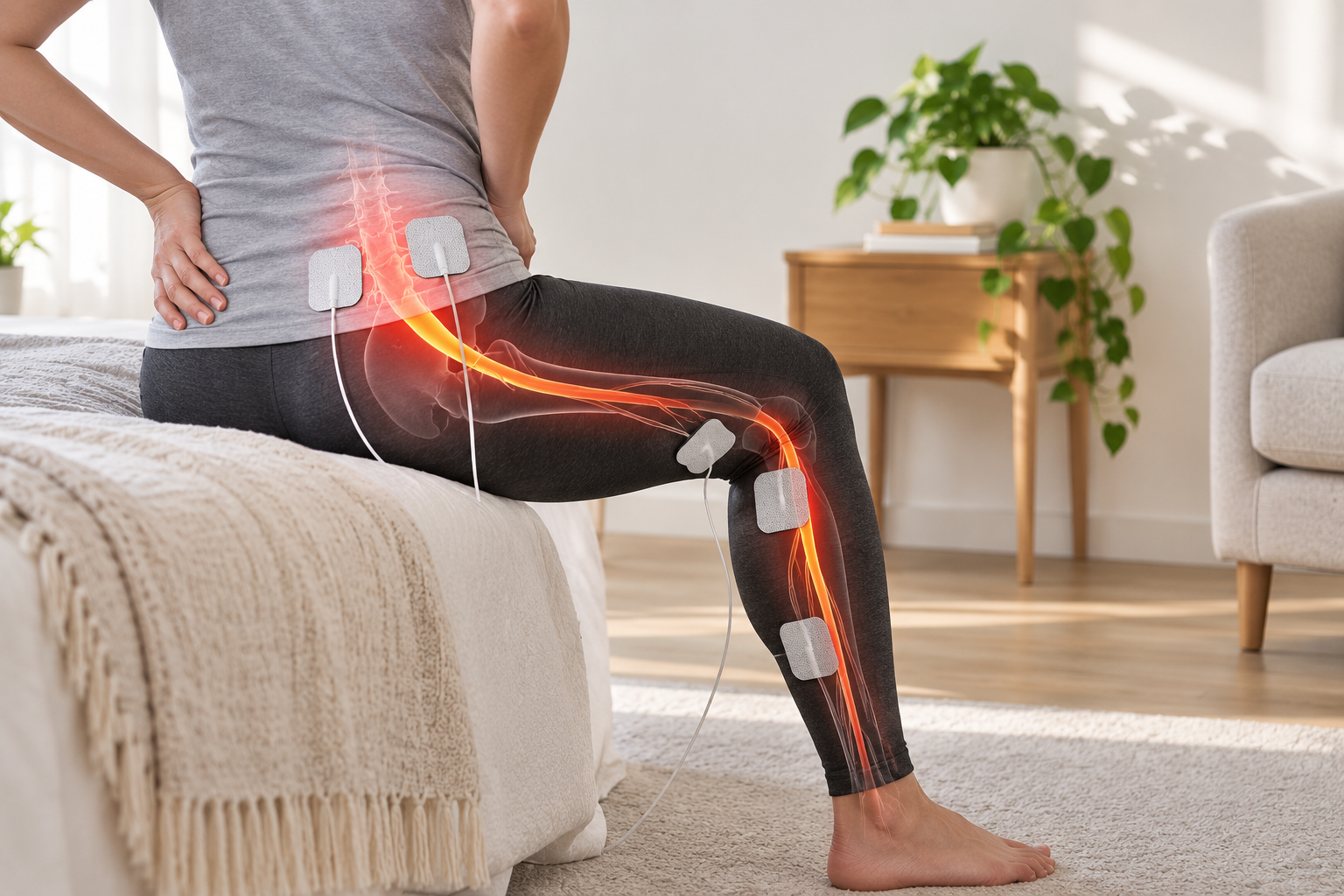
TENS for Sciatica: Does It Help and How to Use It Safely?
Sciatica can cause pain that travels from the lower back or buttock into the leg, sometimes accompanied by tingling, numbness or weakness. If you’re looking for practical ways to manage these symptoms, you may have come across TENS for sciatica.
A TENS (Transcutaneous Electrical Nerve Stimulation) machine delivers mild electrical impulses through electrode pads placed on the skin and may provide temporary pain relief for some people. However, it is important to understand what TENS can and cannot do. TENS does not treat the underlying cause of sciatica, and current NICE guidance does not recommend offering TENS for managing low back pain with or without sciatica because evidence of benefit is limited.
This guide explains how TENS for sciatica works, where to place electrode pads, how long a session may last, important safety considerations, and what to look for when choosing a TENS machine.
What You Need to Know
If you’re wondering “does TENS help sciatica?”, the answer is not straightforward. Some people may experience temporary pain relief when using a TENS machine, but the evidence specifically for sciatica is limited and results can vary considerably between individuals.
The NHS explains that TENS can provide temporary pain relief for some types of pain, although it does not work for everyone. NICE, however, recommends not offering TENS for low back pain with or without sciatica.
For this reason, TENS should be viewed as an optional pain-management tool rather than a treatment or cure for sciatica. If you choose to try sciatica TENS therapy, correct electrode placement, comfortable intensity and safe use are essential.
What Is Sciatica?
Sciatica describes pain associated with irritation or compression of the sciatic nerve or the nerve roots that contribute to it. The sciatic nerve runs from the lower back through the buttocks and down each leg.
Sciatic-type symptoms commonly affect one side of the body and may include pain, tingling, numbness or weakness. The underlying cause can vary from person to person, which is why persistent or worsening symptoms should not simply be assumed to be sciatica.
NICE recommends considering alternative diagnoses when people develop new or changing low back pain or sciatica symptoms. If your symptoms are severe, persistent or affecting your normal activities, speak with a GP or another qualified healthcare professional for appropriate assessment.
How Does TENS for Sciatica Work?
A TENS machine is a small, battery-powered device connected to adhesive electrode pads. When switched on, the machine sends low-voltage electrical impulses through the pads and into the skin.
These impulses produce a tingling sensation and stimulate nerves around the area being treated. TENS is generally intended to influence the way pain is perceived rather than remove the physical cause of the pain.
Blocking or Modifying Pain Signals
One explanation for how TENS may help with pain is based on the Gate Control Theory of Pain. Electrical stimulation may activate certain sensory nerves and influence the transmission of pain signals to the brain, potentially reducing how strongly pain is perceived.
Encouraging Natural Pain Relief
TENS may also stimulate the release of endorphins, which are naturally occurring chemicals involved in the body’s pain-relief processes.
However, the proposed mechanisms of TENS should not be interpreted as proof that it can resolve the underlying cause of sciatica. A TENS machine may help some people manage the sensation of pain temporarily, but it does not remove nerve compression or correct the condition responsible for sciatic symptoms.
Does TENS Help Sciatica?
One of the most common questions is, “does TENS help sciatica?” TENS may provide temporary pain relief for some individuals, but there is not enough reliable evidence to recommend it as an effective treatment for sciatica itself.
NICE guidance specifically recommends not offering TENS for low back pain with or without sciatica. The NHS also notes that TENS can help with some types of pain but does not work for everyone.
This means that individual experiences can differ. Some users may find a TENS machine useful as part of their personal pain-management routine, while others may notice little or no benefit. It is therefore better to approach TENS with realistic expectations rather than viewing it as a guaranteed solution.
What Does the Evidence Mean?
Research into electrical stimulation and pain management has produced mixed findings, and evidence specifically relating to sciatica is limited. NICE’s assessment of TENS and other electrotherapy treatments did not find sufficient evidence of benefit to recommend TENS for low back pain and sciatica.
This is particularly important when choosing how to manage sciatica. TENS should not replace appropriate medical assessment, exercise advice, physiotherapy or other treatments recommended for your individual circumstances.
If TENS provides some temporary comfort, it may still be useful to you, but it should be considered a symptom-management option rather than a cure.
Where Should TENS Pads Go for Sciatica?
If you’re asking “where should TENS pads go for sciatica?”, placement depends on where you experience pain and the instructions provided with your particular TENS machine.
In general, electrode pads are positioned on clean, intact skin around the painful area. For sciatic-type pain, this may involve areas around the lower back, buttock or affected leg, depending on your symptoms and the manufacturer’s guidance.
TENS pads should not be placed directly over broken, irritated, infected or numb skin. The NHS also advises avoiding areas such as the front or sides of the neck, the mouth and eyes. Never place electrodes directly across the chest.
If you’re unsure about the best position for electrode pads for sciatica, ask a GP, physiotherapist or other qualified healthcare professional for guidance.
Electrode Placement Checklist
- Clean and dry the skin before applying the pads.
- Place electrodes near the painful area according to the manufacturer’s instructions.
- Leave space between individual electrode pads rather than placing them directly next to each other.
- Avoid broken, infected, irritated or numb skin.
- Do not place pads over the front or sides of the neck.
- Do not place pads over the eyes, mouth or directly across the chest.
- Follow the specific electrode-placement instructions supplied with your TENS machine.
How Long Can TENS Be Used for Sciatica?
Another common question is, “how long can TENS be used for sciatica?” There is no single session length that is appropriate for every person with sciatica.
Treatment duration can vary depending on the TENS machine, programme, intensity and individual response. Always follow the instructions supplied with your particular device.
Some TENS machines may recommend sessions of around 20 to 30 minutes, while other devices may provide different guidance. Longer or more frequent use does not automatically mean better pain relief.
If the treatment causes discomfort, pain or skin irritation, stop using the machine. The NHS also advises not using TENS while sleeping, driving or operating machinery and not using it in the bath or shower.
How to Use a TENS Machine for Sciatica Safely
Using a TENS machine correctly is important, particularly when you’re using it for the first time.
Step 1: Read the Instructions
Before using your TENS machine, read the manufacturer’s instructions carefully. Different devices can have different programmes, controls, intensity ranges and electrode-placement recommendations.
Step 2: Prepare Your Skin
Make sure the skin is clean and dry before applying the electrode pads. Avoid applying lotions, creams or oils immediately before treatment because they can affect the pads’ ability to stick properly.
Step 3: Apply the Electrode Pads
Place the pads around the painful area according to your machine’s instructions. Make sure they are securely attached to the skin and leave an appropriate gap between pads.
Do not place electrodes on broken, irritated, infected or numb skin.
Step 4: Start With a Low Intensity
Switch the TENS machine on and gradually increase the intensity. You should normally feel a noticeable but comfortable tingling sensation.
TENS should not feel painful or excessively uncomfortable. Increasing the intensity as much as possible does not necessarily provide better results.
Step 5: Monitor Your Response
Pay attention to how your skin and symptoms respond during treatment. If you develop significant discomfort, pain, itching or irritation beneath the electrode pads, switch the machine off and remove the pads.
Step 6: Switch Off Before Removing the Pads
Always switch the TENS machine off before removing or repositioning the electrode pads. Store the pads and device according to the manufacturer’s instructions so that they remain in good condition.
TENS for Sciatica vs Other Pain-Management Options
TENS should generally be considered one possible method of managing pain rather than a standalone treatment for sciatica.
NICE recommends advice that encourages people with low back pain or sciatica to continue normal activities where possible and considers exercise programmes as part of management.
Depending on the cause and severity of your symptoms, a healthcare professional may recommend other approaches such as appropriate exercise, physiotherapy, medication or further assessment.
If you’re exploring sciatica pain relief options, it is therefore worth considering TENS alongside a broader management plan rather than relying on electrical stimulation alone.
What to Look for in a TENS Machine for Sciatica
If you decide to explore a TENS machine, choosing a device that is simple and comfortable to use can make it easier to follow your treatment routine.
Adjustable Intensity Levels
A range of intensity settings allows you to start gently and adjust the stimulation to a comfortable level.
Multiple Programmes
Some TENS machines offer different pre-set programmes or adjustable settings. These can make it easier to adapt the stimulation to your preferences while following the manufacturer’s guidance.
Portable Design
A compact, lightweight device can be convenient if you want to use TENS at home or while travelling. Look for a design that is straightforward to operate and easy to carry.
Compatible Electrode Pads
Electrode pads are an important part of any TENS system. Over time, they can lose their adhesive properties and may need replacing.
Choosing compatible, high-quality replacement electrode pads can help maintain reliable skin contact and make your device easier to use.
Clear Instructions and Safety Features
Choose a TENS machine supplied with clear instructions covering operation, electrode placement and safety precautions. Look for products that meet relevant UK requirements and are supplied by reputable providers.
Common Mistakes When Using TENS for Sciatica
Many first-time users can make simple mistakes that affect comfort and usability.
Placing the Pads Incorrectly
Electrode placement matters. Avoid placing pads on damaged or unsuitable areas of skin and always follow the instructions supplied with your device.
Using Too Much Intensity
A stronger sensation does not necessarily mean better results. The stimulation should normally feel comfortable rather than painful.
Using Worn-Out Electrode Pads
Old electrode pads may lose their stickiness and may not maintain consistent contact with the skin. Replacing worn pads with suitable Replacement Electrode Pads can help maintain good contact.
Ignoring Changes in Symptoms
TENS should not be used to mask symptoms that are becoming significantly worse. If pain persists, changes or is accompanied by concerning symptoms, seek appropriate medical advice.
Frequently Asked Questions
Does TENS cure sciatica?
No. TENS should not be described as a cure for sciatica. It may provide temporary pain relief for some people, but it does not address the underlying cause of sciatic symptoms. NICE currently recommends not offering TENS for low back pain with or without sciatica because the evidence of benefit is insufficient.
Where should TENS pads go for sciatica?
TENS pads are generally placed on clean, intact skin around the painful area, following the instructions supplied with your particular device. Depending on where symptoms are experienced, this may include areas around the lower back, buttock or affected leg. Avoid broken, infected, irritated or numb skin and areas such as the front of the neck, eyes and mouth.
How long can TENS be used for sciatica?
There is no universally recommended session length specifically for sciatica. Follow the instructions supplied with your TENS machine and stop treatment if it causes pain or significant skin irritation. Do not use TENS while sleeping, driving or operating machinery.
Can TENS make sciatica worse?
TENS should normally produce a comfortable tingling sensation rather than pain. If stimulation feels painful, your skin becomes irritated or your symptoms worsen during use, switch the machine off and remove the pads. Persistent or worsening symptoms should be assessed by a healthcare professional.
Can I use TENS every day for sciatica?
The appropriate frequency depends on your device instructions and individual circumstances. There is no single daily schedule that is suitable for everyone with sciatica. Do not assume that longer or more frequent use will provide better results. If you regularly rely on TENS to manage ongoing pain, speak with a healthcare professional.
Is TENS safe for sciatica?
TENS is a non-invasive form of electrical stimulation, but it is not suitable for everyone. The NHS advises people with epilepsy or a pacemaker not to use TENS and recommends that pregnant people speak to their doctor or midwife before using it. Skin irritation can also occur where electrode pads are applied.
Key Takeaways
TENS for sciatica may provide temporary pain relief for some people, but the evidence specifically for sciatica is limited. NICE currently recommends not offering TENS for low back pain with or without sciatica, so it should not be presented as a proven treatment or cure.
If you choose to try a TENS machine, use it carefully and follow the manufacturer’s instructions. Position electrode pads on clean, intact skin near the painful area, start with a comfortable intensity and stop if you experience pain or significant irritation.
TENS should be considered alongside appropriate self-management and professional healthcare advice rather than as a replacement for assessment or treatment.
Explore TENS Machines and Replacement Electrode Pads
Looking for equipment to support your pain-management routine?
Explore our range of TENS Machines for convenient, user-friendly options suitable for home use. If your existing pads have become worn or no longer adhere properly, you can also explore Replacement Electrode Pads that are compatible with your device.
Explore TENS Machines; Replacement Electrode Pads and find the equipment that best suits your needs.
Safety Disclaimer
This article is intended for general informational purposes only and should not be considered medical advice. TENS therapy may not be suitable for everyone, and results can vary between individuals. Always read the manufacturer’s instructions before using a TENS machine and consult a qualified healthcare professional if you have an underlying medical condition, are pregnant, have an implanted electrical device, or are unsure whether TENS therapy is appropriate for you.
If you experience severe or worsening symptoms, new weakness, significant numbness, loss of bladder or bowel control, or numbness around the genital or anal area, seek urgent medical attention rather than relying on TENS.